Does waterproofing paint work on basement walls? It may have a role as a specified surface treatment, but painting alone is not a dependable solution to recurring water entry. The product, the wall beneath it and the moisture problem all need to fit the proposed use.
For Toronto and GTA homeowners, the useful decision is whether a coating belongs in the plan after the wall has been assessed. This guide explains what to check before buying paint, recoating an old finish or accepting a proposal that promises a dry basement from a painted surface.
Does waterproofing paint work if the wall still leaks?
Do not rely on a new coating to settle an unexplained leak. An interior surface treatment can leave the moisture source in place. Its role needs to be considered alongside the work that addresses that source.
The University of Minnesota Extension’s basement-moisture guidance explains that an interior membrane or coating may appear to help temporarily while water remains present. The treatment can deteriorate or water can find another route. Its guidance favours controlling the moisture source instead of relying on the interior coating alone.
When someone asks, “Does waterproofing paint work?”, the missing detail is often what “work” means. Making the wall look uniform, treating a specified surface condition and stopping a recurring leak are different objectives. Ask which objective the proposed product is meant to achieve.
This does not mean every coating is unsuitable. It means a broad claim such as “waterproofs the basement” needs a more precise explanation of the product, its limits and the conditions it is intended to address.
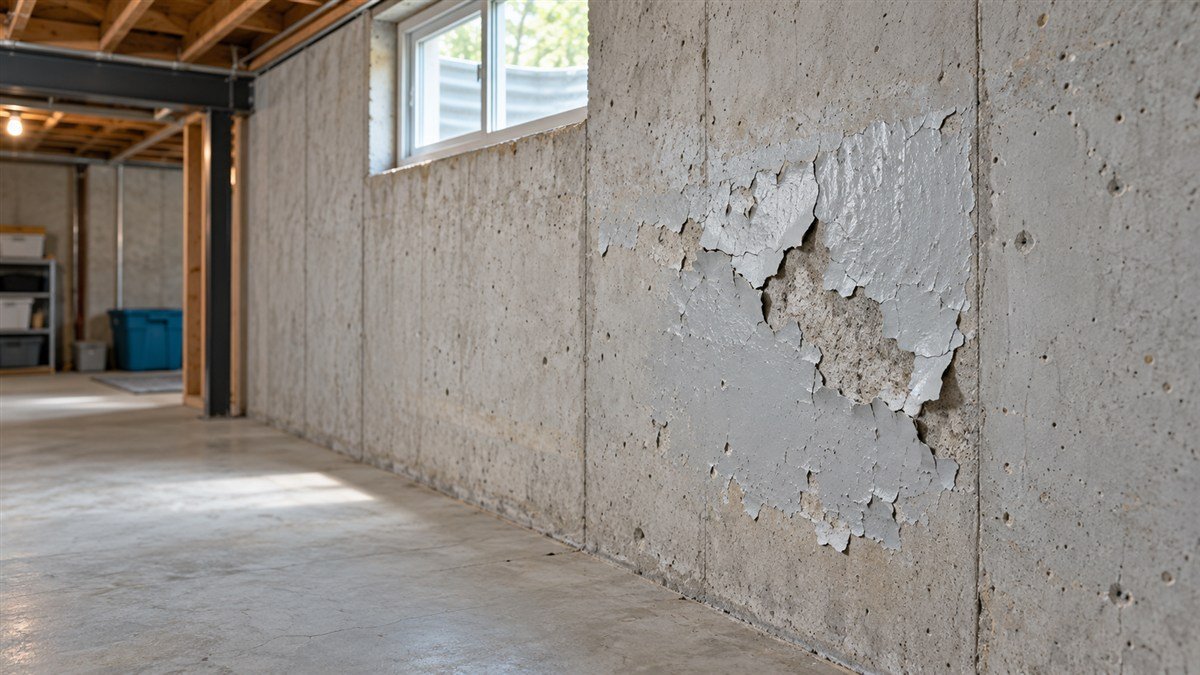
What does peeling or bubbling paint tell you?
A deteriorating finish is a reason to investigate the surface and the wall beneath it. It does not identify the moisture source or prove which repair is needed. Repainting should follow an explanation of the condition rather than erase the evidence before it is considered.
The Government of Canada’s foundation-maintenance guidance lists bubbling, discoloured or peeling basement finishes as possible signs of water-related problems. It recommends professional help when a suspected leak’s source cannot be found.
Keep a photograph of the affected area and any information about the existing coating. If a pale deposit is the main concern, our guide to efflorescence on basement walls addresses that separate identification question. The colour of a mark should not determine which paint to buy.
What should you check before buying a coating?
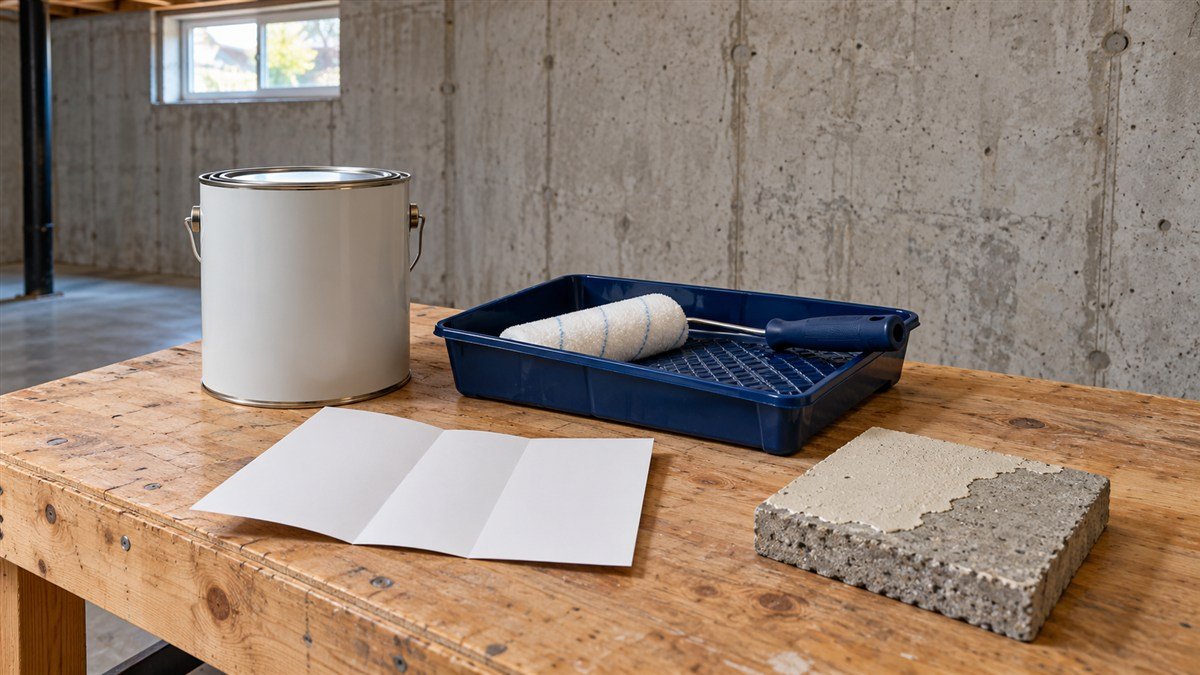
Match the exact product to the actual surface and the intended result. Read its current technical instructions, including preparation requirements and exclusions. The front of a container is not enough information to specify treatment for an unseen basement.
Bring the supplier or person recommending the work a useful description: poured concrete or masonry, bare or previously coated, known repairs, and where moisture has appeared. State what is unknown. A product recommendation based on bare concrete needs reconsideration if the wall is actually covered in an unidentified older finish.
| Check | Ask for | Clarify if missing |
|---|---|---|
| Wall material | Permitted substrates | Does the actual wall qualify? |
| Existing finish | Compatibility and preparation instructions | What must remain or be removed? |
| Moisture condition | Permitted conditions and exclusions | Does recurring leakage need separate work? |
| Application | Current installation and safety instructions | Who will confirm they can be followed? |
| Promised result | Written purpose and warranty terms | What is covered if the result falls short? |
A substrate is the surface receiving the coating. Ask about that surface specifically, including any repair material within it. This checklist helps evaluate a recommendation; it is not a universal paint specification or an endorsement of a particular product.
How does a coating differ from foundation crack repair?
A surface coating and an injected crack repair describe different work. A coating treats an exposed face; injection places repair material within an identified crack. Neither description, on its own, establishes that the method suits every water problem in the room.
Aftermath’s foundation crack repair service assesses suitable poured-concrete wall cracks for polyurethane or epoxy injection. The proposed method depends on the crack, conditions and repair objective. The epoxy versus polyurethane guide explains that material-selection decision in more detail.
Ask which task addresses the identified opening
Consider an illustrative proposal that says only “prepare and paint basement wall.” If a leaking crack was also reported, ask whether that opening has been assessed and what work addresses it. Do not infer an injection repair from the word “waterproofing” beside a painting item.
Equally, a quotation for one crack should not be read as a promise to address moisture across every painted wall. Ask for any broader waterproofing work to be identified separately. Clear boundaries help you understand the result being offered without selecting a repair from its name alone.
Can you coat a wall that is already painted or repaired?
That decision depends on the proposed product and the existing surface. Do not assume a new coating can go over every older paint, patch or injection finish. Identify what is present and obtain the applicable preparation and compatibility instructions before work begins.
Take those details with you when asking, “Does waterproofing paint work over the coating already here?” If the earlier product is unknown, say so. An old invoice, labelled container or repair record may help the person assessing compatibility; an unsupported guess about the brand does not.
Agree who will assess the surface, plan any removal and protect the surrounding room. Do not begin scraping or grinding an unidentified finish simply to make the wall match a product description. A preparation plan should address the materials present and the instructions for the work being proposed.
Suspected mould is a separate issue. Health Canada’s moisture and mould guidance calls for addressing the moisture problem and appropriate investigation where its cause or corrective action is unclear. A coating proposal should not be treated as confirmation that a suspected mould problem has been assessed or resolved.
When is the wall ready to repaint?
Proceed when the outstanding moisture questions and the selected coating’s preparation requirements have been addressed. Ask who will confirm readiness for that specific product. A wall looking dry on one visit should not replace the agreed checks.
Keep the finishing decision practical:
- Identify the completed work. Record the treated area and any moisture concern still outside its scope.
- Confirm the product requirements. Obtain the applicable surface, drying and application instructions instead of choosing a generic waiting period.
- Keep access available where needed. Establish whether the person reviewing a repair still needs to see the wall before it is coated.
- Agree what happens if moisture returns. Keep the repair and product contacts with their separate written terms.
If the continuing question concerns moisture forming on a cool surface, our basement condensation guide covers humidity and surface conditions. Repainting should not close a question that belongs to that different investigation.
Why Aftermath Crack Fix?
Aftermath Crack Fix offers foundation crack repair and basement/foundation waterproofing in Toronto, the GTA and surrounding areas. Free quotations explain the assessed work and its limits. Suitable poured-concrete cracks may be treated from inside where conditions allow.
Eligible crack repairs carry a lifetime warranty for as long as the original customer owns the property, under the written terms. Coverage is non-transferable unless separately agreed in writing. It applies to the eligible repair, not every wall coating or every possible basement leak.
Request a free repair or waterproofing quotation with the property postal code, wall condition and known repair history. Service availability is confirmed for the property; photographs can help start the discussion, though an on-site assessment may still be needed.
Decide what the coating is meant to do
Does waterproofing paint work? The useful answer starts with the actual wall and a clearly stated purpose. Check the product’s documented use, identify any separate repair and confirm the preparation before repainting. A finished-looking surface should not be taken as proof that a recurring leak has been resolved.
For a free foundation crack repair or basement waterproofing quotation in Toronto or the GTA, call Aftermath at (647) 448-9123.
Frequently asked questions
Is waterproofing paint the same as ordinary wall paint?
Do not assume products are interchangeable from their names. Check the intended substrate, permitted moisture conditions and stated performance in the current technical instructions. A decorative finish and a specified waterproofing coating should be evaluated for the job each is meant to do.
Can waterproofing paint repair a leaking crack?
Do not treat a coating as confirmation that the crack has been repaired. Have the opening assessed and ask which work addresses it. For a proposed injection repair, the material is placed within the identified crack; coating the face is a separate task.
Should I paint over white deposits on the wall?
Identify the deposit and resolve outstanding moisture and preparation questions first. Ask whether the chosen coating permits the existing surface and what preparation it requires. Covering the mark does not establish why it appeared.
How long will waterproofing paint last?
There is no single lifespan established here for all products and basement conditions. Read the selected product’s terms and ask how the actual wall fits its stated use. A warranty period should not be presented as a guaranteed interval before any moisture can return.
Does waterproofing paint work on basement floors too?
A wall recommendation does not establish floor suitability. Check whether the exact product is specified for the intended floor use, and have any floor-water problem assessed separately. Do not transfer a wall application instruction to a different surface by assumption.
Sources
- University of Minnesota Extension, Moisture in basements: causes and solutions: limitations of relying on interior coatings alone.
- Government of Canada, Foundation maintenance: deteriorating finishes and unexplained leaks; page dated March 23, 2026.
- Health Canada, Guide to addressing moisture and mould indoors, January 2023: moisture-source investigation and appropriate assistance.
Sources reviewed October 9, 2026. Product-specific requirements must come from the current instructions for the chosen coating. Illustrations are AI-generated, not photographs of Aftermath customer work.