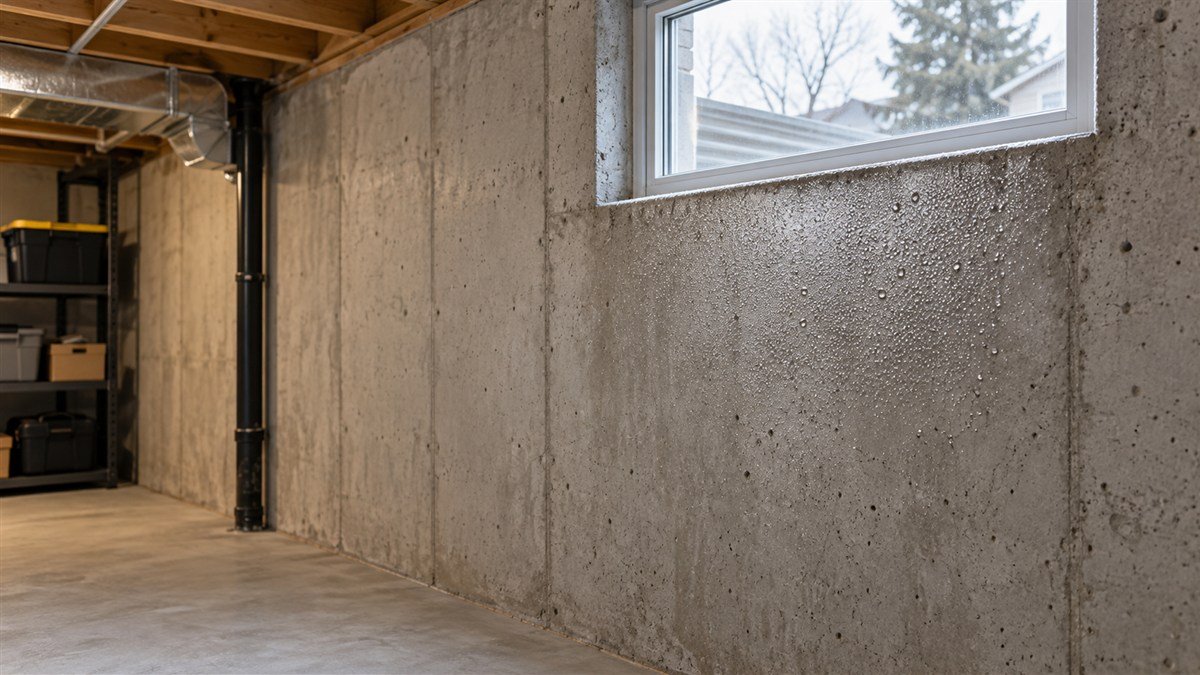
Basement condensation forms when moisture in the air turns into liquid on a sufficiently cold surface. It can leave droplets on a wall, window or pipe even when water is not entering through a foundation crack. A wet surface still needs investigation if the source is uncertain: condensation and a separate leak can both deserve attention.
For Toronto and GTA homeowners, the useful distinction is between managing indoor humidity and repairing an identified water-entry route. This guide explains what humidity readings can tell you, why opening a window is not always helpful, and how to keep the two questions separate when deciding what to do next.
How does basement condensation form?
Condensation is water forming from vapour already present in the air. A cool basement surface can collect that water when the air touching it cools sufficiently. This differs from liquid travelling through an opening or moisture moving through concrete.
The University of Minnesota Extension’s basement-moisture guide distinguishes indoor moisture, humid outdoor air and rain or groundwater. Its explanation is useful because similar-looking dampness can come from different mechanisms.
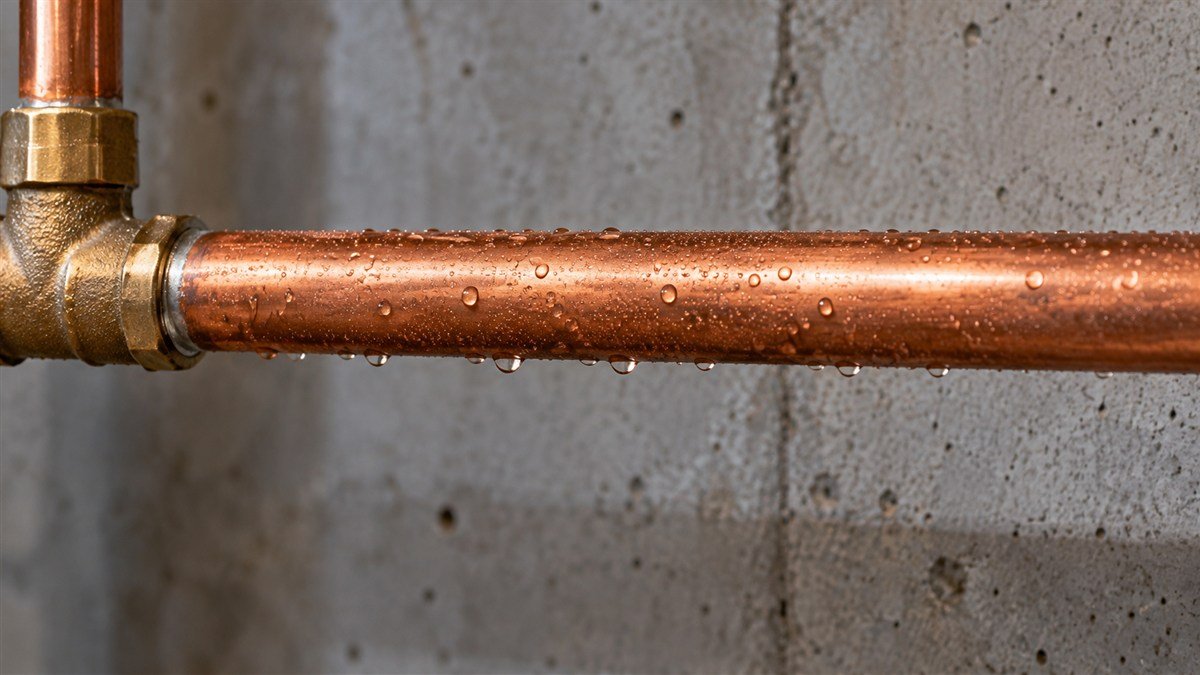
Start by describing the surface rather than naming a cause. Are there beads on the exposed face of a pipe? Is a wall generally damp? Did you actually see a stream emerge from an opening? These are different observations to bring to a conversation, even when they occur in the same room.
A photograph can show droplets and their location. It cannot measure the air conditions that existed when they formed or reveal everything behind a finish. Keep the original photograph with the time and location instead of treating the image as a diagnosis.
Why can the basement feel damp when it has not rained?
Indoor activities and humid air can contribute to basement condensation without a new rain event. Cooking, showering and an improperly vented dryer are examples discussed in the University of Minnesota guidance. The same guide explains that opening basement windows to warm, humid outdoor air can cause condensation on cooler walls and floors.
That is why “airing it out” needs some context. A window being open is an observation, not proof that the basement is drying. Include the weather, which windows were open and whether heating, cooling or a dehumidifier was operating when you noticed the dampness.
Seasonal changes also make last month’s routine a poor substitute for today’s observations. A Toronto basement used for laundry may have different indoor conditions from a nearby storage basement. There is no reason to assume the same window-opening routine or appliance setting will answer both households’ concerns.
For example, a useful note might say: “Droplets appeared on the exposed pipe during a humid afternoon; the basement window had been open.” Another could say: “The window was closed and the room felt comfortable, but water appeared beside the repaired crack.” These are illustrative descriptions, not customer stories or proof of either cause. They give the next person a clearer question to investigate.
Which humidity readings are useful?
Record the relative humidity, the room temperature if available, and where and when the reading was taken. Relative humidity describes how much water vapour is present compared with the maximum possible at that temperature and pressure. A hygrometer is an instrument that measures it.
Health Canada’s relative-humidity factsheet explains why temperature and season affect these readings. It also notes that very cold outdoor conditions can require lower indoor humidity to avoid condensation on cold surfaces. A single comfortable-looking percentage is not a universal guarantee of dry walls.
You do not need a collection of instruments to start an enquiry. If you already have a monitor, record what it displays and follow its placement instructions. If you do not have one, say that humidity has not been measured rather than estimating it from how the room feels.
| Record | Include | What it cannot establish alone |
|---|---|---|
| Air reading | Relative humidity, temperature and time | Whether a concealed wall is dry |
| Monitor position | Room and placement used | Conditions at every surface |
| Visible moisture | Which wall, window or pipe was wet | The complete source of the water |
| Operating conditions | Open windows, laundry and equipment use | That one activity caused the problem |
When comparing notes about basement condensation, keep measurement locations clear. “Lower reading after running the dehumidifier” is incomplete if the monitor also moved to another room. Record both changes; the aim is to make the information interpretable, not to produce a particular number.
What can help reduce condensation?
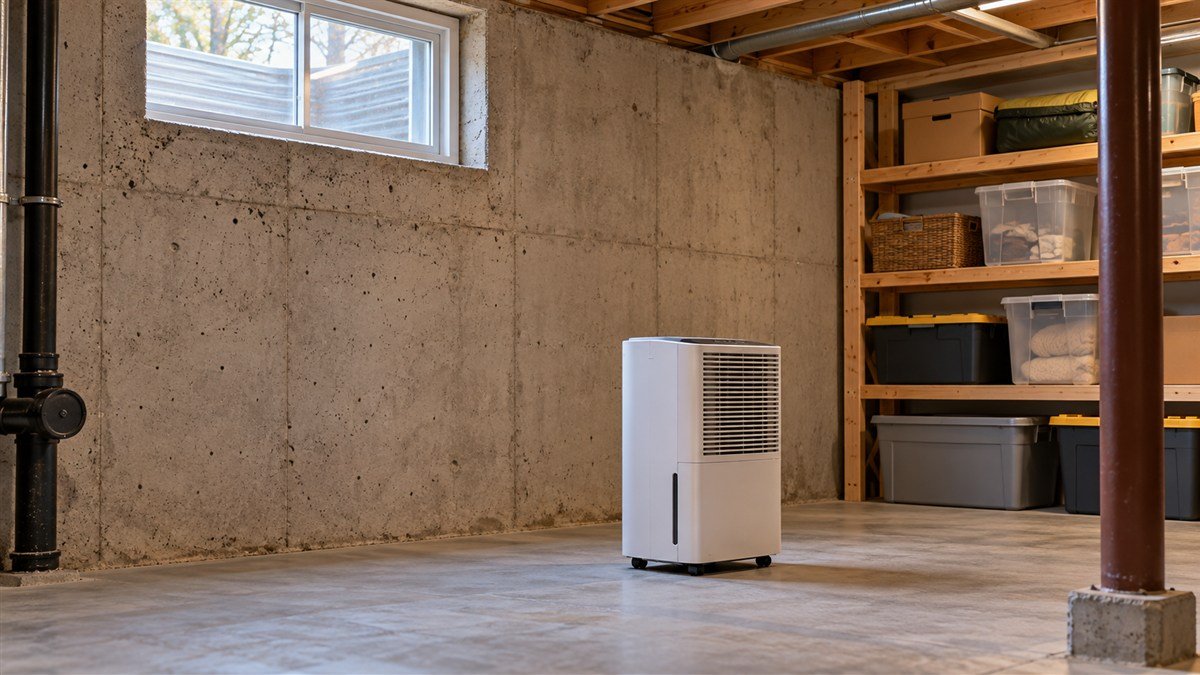
To reduce basement condensation, start with the moisture sources and the conditions in the room. Health Canada’s moisture and mould guide recommends indoor relative humidity between 30% and 50%, using a dehumidifier where necessary. Its basement guidance also says to keep windows closed while the dehumidifier runs and to check pipes for condensation.
Use that guidance alongside the equipment’s instructions and the observed condition. If moisture persists, investigate the reason instead of repeatedly lowering a setting and assuming the building has been checked.
- Ventilate daily activities. Run bathroom and kitchen exhaust fans while showering or cooking. Confirm outdoor venting; seek a qualified check if ineffective.
- Check laundry moisture. Vented dryers should exhaust outdoors; hanging wet laundry indoors adds humidity.
- Operate the dehumidifier properly. Close basement windows; empty its container or maintain drainage according to its instructions.
- Address confirmed pipe condensation. Dry and insulate affected pipes with suitable foam. Have suspected leaks checked before covering them.
- Leave room for airflow. Keep heating vents and outside walls clear of obstructions, and cardboard off concrete floors.
If you are comparing equipment recommendations, ask what information supports the selection and who will help if the expected change does not occur. This article does not prescribe a dehumidifier size, temperature setting or wall-insulation assembly for an unseen basement.
When does moisture need another investigation?
Keep a separate leak question open when water has been observed entering at a particular location or the source remains unexplained. A humidity reading cannot establish the route of liquid water. Health Canada recommends professional assistance when the moisture source or appropriate corrective action is unclear, and flags suspected hidden mould and recurring mould for further attention.
Match the next conversation to the unresolved concern:
- Water emerging at an opening: identify the exact location and describe what you saw before the water spread.
- A plumbing concern: tell the appropriate plumbing professional whether the pipe surface was beaded with moisture or water was seen coming from a joint.
- A concealed or recurring damp area: explain what covers it and what previous work has been done; agree on investigative access.
- A ventilation or equipment question: ask a qualified ventilation or HVAC professional about the existing system and the limits of the proposed change.
If the main symptom is at floor level, our guide to water seeping through a basement floor addresses that separate investigation. For storm-related entry in several places, see what to record when a basement leaks after rain.
Keep older surface marks separate from fresh droplets too. Our article on efflorescence on basement walls explains the questions raised by pale deposits. Do not assume every visible mark has the same history or needs the same treatment.
What should happen before insulating or finishing the wall?
Resolve outstanding moisture questions before treating a new finish as the solution. Agree who will assess the existing condition and who will specify the wall assembly. The University of Minnesota guidance warns against finishing a basement before its moisture problems are addressed.
A renovation quotation and a moisture assessment have different purposes. Ask the person proposing the finish which findings they relied on and whether any conditions remain outside their scope. An attractive wall covering does not document what was established beforehand.
Before proceeding, keep a short handover record:
- Name the affected location and the explanation that has actually been established.
- List any water-entry, humidity or concealed-area question still awaiting an answer.
- Identify who decides whether the area is ready for the proposed work.
- Keep the agreed installation requirements and any remaining access needs with the quotation.
For example, “Install new wall panels” says little about a previously damp corner. “Proceed after the identified moisture issue has been addressed and the installer confirms the specified substrate requirements” assigns a decision that can be checked. The wording is illustrative; the actual requirement belongs in the plan for your property.
Why Aftermath Crack Fix?
Aftermath Crack Fix provides foundation crack repair and basement/foundation waterproofing in Toronto, the GTA and surrounding areas. Free quotations explain the proposed work and its limits. Where a suitable poured-concrete wall crack is identified, an interior approach may avoid exterior excavation.
Our foundation crack repair service and written warranty apply to the assessed repair. Eligible crack repairs carry a lifetime warranty for as long as the original customer owns the property, with no transfer unless separately agreed in writing. That coverage is not a whole-basement or structural guarantee, and it does not make a crack repair a treatment for condensation.
Describe the foundation concern before choosing work. Request a free quotation with your job postal code, the affected location and any safe photographs. If the unresolved issue concerns ventilation, plumbing or mould, clarify the appropriate specialist involvement as part of the next step.
Conclusion
Basement condensation needs a clear account of the air conditions and the surfaces becoming wet. Record humidity readings in context, explain what changed after any humidity-control measure, and keep separate leak questions open. That helps you choose the appropriate next step without treating a lower reading or a drier-looking wall as proof that every moisture problem has been resolved.
Frequently asked questions
Can opening basement windows make condensation worse?
Yes, when warm, humid outside air meets cool basement surfaces. The University of Minnesota guide describes this summer mechanism. Opening a window should not be assumed to dry every basement in every condition.
Can basement condensation happen in winter?
Yes. Health Canada’s relative-humidity factsheet discusses condensation on cold surfaces in winter as well as summer basement conditions. Assess the actual room and surface conditions rather than ruling it out by the calendar.
Should windows be closed while a dehumidifier runs?
Health Canada’s basement guidance says to keep them closed while the unit operates. Follow the appliance instructions as well, and explain any ventilation concern to the professional advising on the home’s system.
Does a lower humidity reading mean the wall is dry?
No. The reading describes the air at the monitor, not the condition throughout the wall. If concealed moisture or liquid entry remains in question, obtain the appropriate assessment rather than using that reading as clearance to cover the area.
Is a wet pipe condensation or a plumbing leak?
A wet exterior surface does not settle that question. Describe whether you saw beads across the pipe or water coming from a particular joint, and have uncertain or persistent leakage checked by a plumbing professional.
Sources: University of Minnesota Extension, Moisture in basements: causes and solutions; Health Canada, Relative humidity indoors: factsheet (2016), and Guide to addressing moisture and mould indoors (2023). Links appear beside the relevant explanations. Reviewed October 7, 2026.