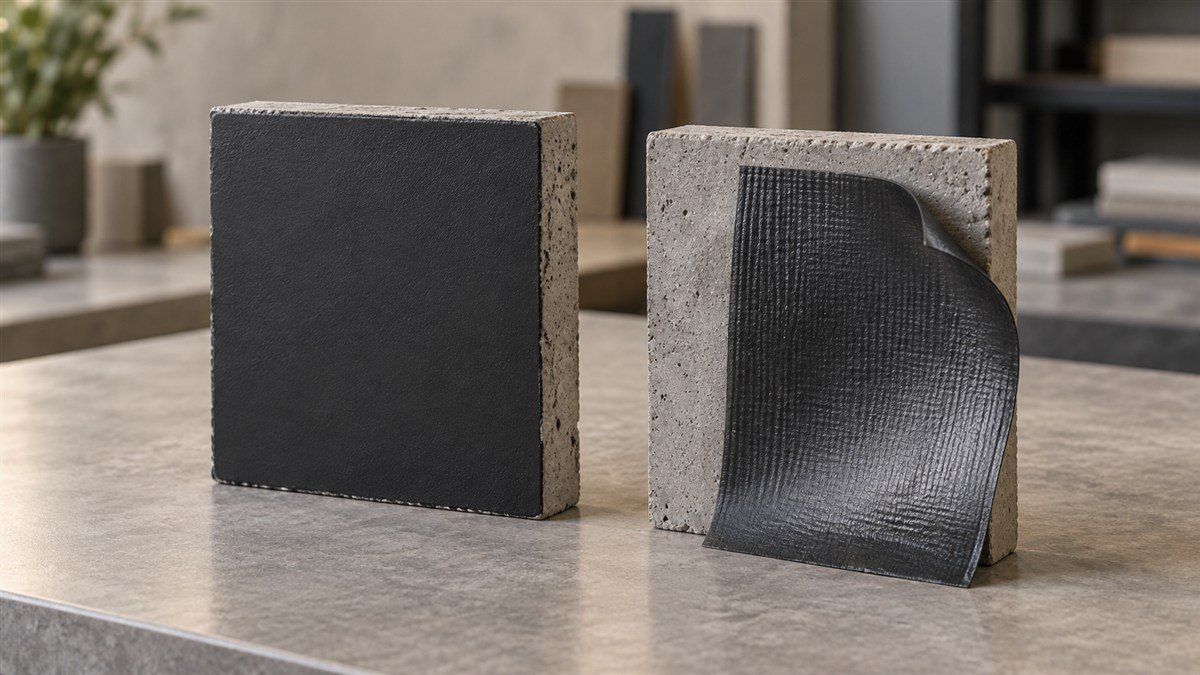
AI-generated editorial illustration of material samples; appearance alone does not establish waterproofing performance.
Dampproofing vs waterproofing can be confusing when both terms appear in a basement quotation. They are not interchangeable. For a Toronto homeowner, the useful comparison is what the proposed treatment is designed to do at this property, including how it deals with water at the foundation.
This guide explains the terms for below-ground foundation walls and helps you read a proposal. It is not an installation guide or a way to identify a buried system from a photograph.
Dampproofing vs waterproofing: what is the main difference?
Dampproofing is intended to resist moisture from the surrounding soil. Waterproofing is designed for more demanding liquid-water exposure, including pressure where the specified system is rated for it. The material, installation details and site conditions determine whether a particular proposal is suitable.
Hydrostatic pressure means pressure from water against a surface. CMHC’s Renovator’s Technical Guide (page 38) distinguishes soil-moisture control from waterproofing for liquid water exerting pressure on a foundation. Do not read the word “waterproofing” as an unlimited promise either: ask for the actual system specification and its limits.
The following comparison is a starting point for a conversation, not a test that selects a product for your home.
On a narrow screen, scroll the table sideways.
| Question | Dampproofing | Waterproofing |
|---|---|---|
| Intended role | Resist soil moisture. | Control liquid-water entry under specified exposure. |
| Water pressure | Not a pressure-resistant solution. | Check the system’s pressure rating and intended use. |
| Cracks and joints | Do not assume a coating repairs them. | Confirm how the design treats each detail. |
| What to request | Product and application records. | System specification and defined coverage. |
Does an existing dampproofing treatment mean the basement will stay dry?
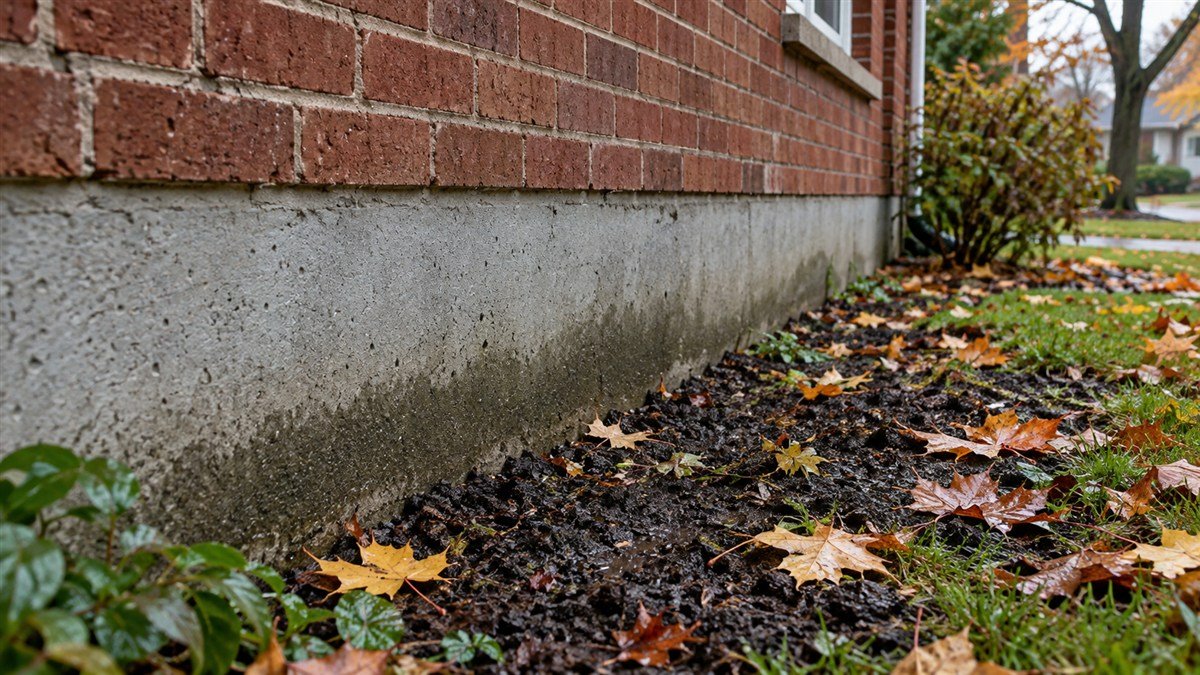
No single treatment name establishes that outcome. A foundation coating is one part of the building’s water-management arrangement, and its present condition may be hidden. An old invoice saying “dampproofed” is useful history, but it does not explain a new wet area by itself.
The U.S. Department of Energy’s Building America guidance on below-grade dampproofing describes exterior coatings alongside surface and foundation drainage. It also notes that concrete is porous and that a dampproof coating is not completely waterproof. This is building-science guidance, not a statement about which building-code provisions apply to a Toronto property.
For example, if a record describes exterior treatment during construction, keep it with later repair invoices. A new leak beside a basement window and an old treatment on another wall may involve different areas. Ask the assessor to connect the current observation to the documented work instead of assuming that one cancels out the other.
You can also record the visible roof-water route. Our guide to how downspout extensions can help reduce basement leaks explains that separate question without treating an extension as proof that the foundation has been repaired.
What should a waterproofing proposal explain?
A useful proposal identifies the area being treated, the intended result and the components needed to achieve it. Ask how the work addresses the assessed water-entry problem, including relevant cracks, joints and transitions. A material name without a defined scope leaves too much to interpretation.
For instance, “waterproof the basement” could leave you unsure whether the quotation covers one wall, the full perimeter or a specific opening. Request a marked photograph or simple sketch showing the included area. If a detail is excluded, ask how that affects the expected result.
Do not assume every dark liquid coating is dampproofing, or that every sheet is a complete waterproofing system. The product documentation and the way components work together matter more than their appearance. Ask the contractor to name the product and explain why its intended use fits the proposed location.
If moisture appears across several areas, discuss basement and foundation waterproofing as an assessment of the wider conditions. That discussion should establish the work required before you compare a list of materials or a total price.
Can you tell what was installed from a photograph or black coating?
A photograph may document that work took place, but appearance alone does not identify the product, coverage or condition of buried layers. Start with records that name the system and the area treated. Where records are incomplete, describe the treatment as unknown rather than filling in the gaps.
- Request the quotation, invoice and available product information.
- Match photographs to a wall or location, not just the property address.
- Note the installation date and any later alterations or repairs.
- Ask which conclusions can be supported from those records and what needs further assessment.
Separate what you know from what someone told you. “The invoice names this product on the north wall” is more useful than “the whole house was waterproofed.” If the original contractor is available, a focused question about the documented area may help clarify the record.
Avoid digging beside the foundation simply to check a coating. Access and any investigation should be planned appropriately. If the question is about an interior painted surface, our article on waterproofing paint on basement walls covers that different decision.
Where does foundation crack repair fit into the comparison?
Crack repair addresses a particular defect or water-entry path; it does not establish that every foundation surface has been waterproofed. A suitable isolated crack may need a focused repair. Other symptoms may require a broader investigation and scope.
Aftermath Crack Fix provides polyurethane and epoxy injection for suitable cracks in poured-concrete foundation walls. An interior approach can be appropriate where the assessed crack and access allow it. Our foundation crack repair service explains the selection factors and the limits of treating one crack.
The distinction also works in the other direction: the existence of a crack does not by itself prove that all exterior work has failed. Describe where water appears, when it appears and whether the same location has been repaired before. That gives the assessor a specific problem to investigate.
Sealing water entry does not stabilize a moving foundation. Widening, displacement, bowing or suspected structural damage needs assessment by a structural engineer and an appropriate repair plan; do not treat a coating or injection proposal as structural clearance.
Which questions help you compare dampproofing and waterproofing proposals?
Compare proposals against the same observed problem and intended result. A lower total may cover a smaller area or a different objective. Before choosing, ask each contractor to explain the assumptions, access and exclusions in plain language.
- What evidence supports the proposed work at this location?
- Which wall areas, cracks, joints or openings are included?
- Which product or system is specified, and what conditions is it intended for?
- Who is responsible for access, protection and reinstatement?
- What result is promised, how will completion be documented, and which written warranty applies?
Consider two hypothetical quotations: one treats a single leaking poured-wall crack, while another proposes work along a wall. Their prices cannot be compared meaningfully until you understand why their scopes differ. Ask each contractor to explain what would remain untreated and whether further investigation could change the proposal.
If the project includes finishing the basement, agree when the area can be covered and who makes that decision. University of Minnesota Extension’s basement-moisture guidance advises resolving water problems before finishing and having dry walls before insulation. A fresh surface finish should not become the evidence that the underlying issue is resolved.
Our foundation crack repair cost guide explains access and quotation differences in more detail. Use it to clarify the work being priced, rather than treating a generic rate as your property’s quote.
Why Aftermath Crack Fix?
Aftermath Crack Fix offers foundation crack repair and basement/foundation waterproofing in Toronto, the GTA and surrounding areas. We assess the conditions, explain a suitable proposed scope and provide free quotations. Share the job postal code so availability can be confirmed.
Eligible crack repairs identified in the written agreement carry lifetime coverage while the original customer owns the property. Coverage is non-transferable unless separately agreed in writing and is not a whole-basement or structural guarantee. Ask for the terms that apply to the work you are considering.

Compare the promised result, then the proposed work
Dampproofing vs waterproofing is a useful distinction when it leads to a clearer scope. Identify the current problem, check the records and ask how the proposed work addresses it. The next decision should follow the assessment of your foundation and the stated limits of the repair.
Frequently asked questions
Is dampproofing the same as waterproofing?
No. Dampproofing is intended for soil-moisture resistance. Waterproofing must suit the specified water exposure, including pressure where applicable. Ask what the named system is designed to withstand.
Does black material on a foundation mean it is waterproofed?
No. Colour does not establish the product or its performance. Look for installation records and a named specification; a visible patch cannot verify hidden coverage or condition.
Can I add waterproofing over old dampproofing?
Do not assume compatibility. The existing material and surface condition need to be identified, and the proposed system’s manufacturer instructions must support the preparation and application. Ask for that explanation in the scope.
Will dampproofing fix a leaking foundation crack?
Do not assume it will. A leaking crack needs assessment of the wall, crack condition and water path. Suitable poured-concrete cracks may be considered for injection; movement or suspected structural damage needs a different assessment and plan.
Does a dry basement mean the old treatment is still working?
A dry visit records conditions at that time. It does not verify a hidden installation or explain what happens during other weather. Keep the leak history and work records together when discussing the property.