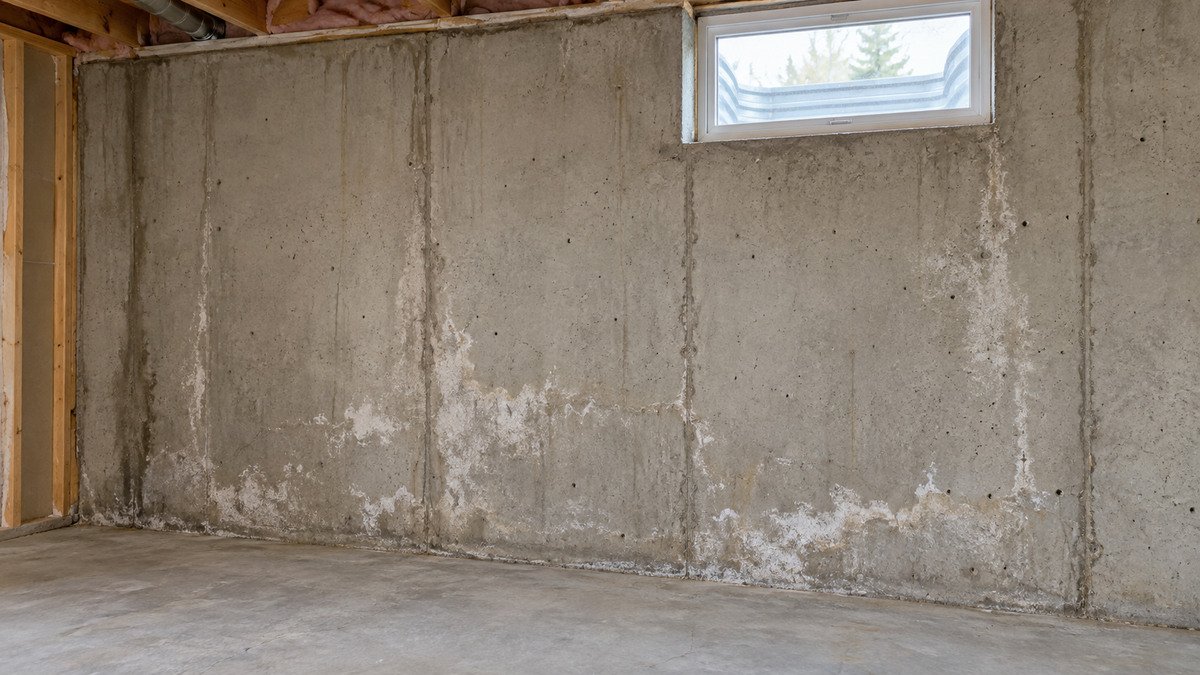
Efflorescence on basement walls is a deposit of mineral salts left behind when moisture reaches the surface and evaporates. It can help explain a white, chalky mark on concrete or masonry, but a photograph cannot confirm every pale deposit or tell you whether water is still entering. The useful next step is to record the condition and investigate any signs of continuing moisture before choosing a repair.
For Toronto and GTA homeowners, this guide explains what those deposits can tell you, what remains uncertain and how to prepare for an assessment. It focuses on the wall surface rather than the separate question of water seeping through a basement floor.
What is efflorescence on basement walls?
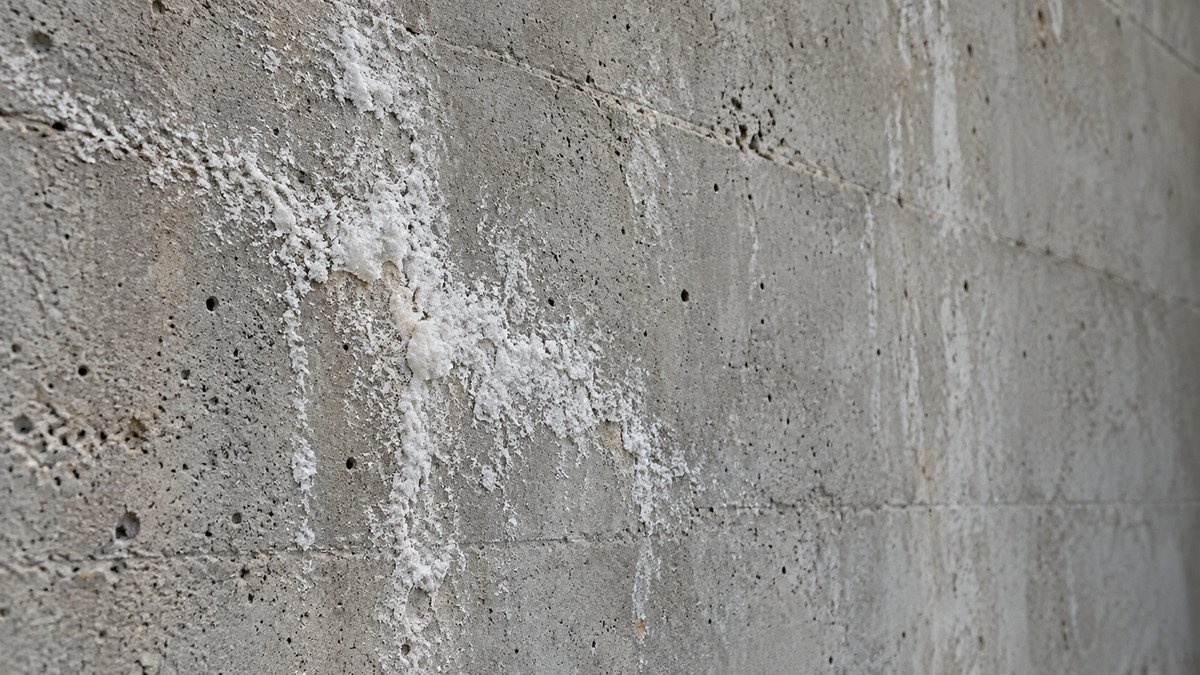
Efflorescence is a surface deposit formed from salts dissolved in water. As that water evaporates, the salts remain on the concrete, brick, block or mortar. The deposit is evidence of that process; it does not identify a particular leak or select a waterproofing method.
The InterNACHI explanation of efflorescence describes how moisture transports dissolved salts through porous building materials. Porous means that a material contains small spaces through which moisture can move. A wall does not need a large, visible opening for moisture movement to deserve investigation.
You may notice a light dusting, an irregular pale band or a more concentrated deposit. Describe what is visible without naming its cause too early. “A white patch beside the window, first noticed last week” gives a contractor a useful starting point. “The waterproofing has failed” is a conclusion that the patch alone cannot establish.
Keep the wall construction in that description. A poured-concrete wall and a concrete-block wall have different details, and a repair intended for a suitable crack in poured concrete does not automatically apply to a masonry joint or a broad area of deposits.
Does a white deposit mean the wall is leaking now?
A deposit can remain after the moisture that formed it has evaporated. Seeing it today does not tell you when that happened, while finding the surface dry once does not rule out intermittent wetting. Compare observations over time rather than treating one visit as a complete moisture history.
If you know when the mark first appeared, record that date. If you have only just moved in or uncovered the wall, say that its age is unknown. A previous owner’s explanation or an old repair invoice may provide context, but it should be kept separate from what you have observed yourself.
Use a wide photograph to show the position on the wall and a closer photograph to show the deposit. Repeat the view when you notice a change. Record whether surrounding finishes look damp, whether an existing patch has spread and whether visible water appeared nearby. There is no need to invent a precise start date or test the material by touching it.
Moisture can reach a basement through different routes. The University of Minnesota Extension guide to basement moisture distinguishes liquid entry, movement through porous materials and condensation on cool surfaces. It also notes moisture held in concrete after construction. A deposit alone cannot decide which circumstances apply to your home.
If you notice a pattern after wet weather, include the dates and location. Our guide to a basement leaking after rain in Toronto covers the broader response to that event. Here, the aim is to preserve the deposit’s history without assuming every mark has the same origin.
Can you distinguish efflorescence from mould by looking?
Efflorescence is a mineral deposit; mould is biological growth. They are different, but colour or a photograph alone may not settle what an unfamiliar patch contains. Identifying one deposit also does not establish the condition of nearby finishes or concealed materials.
Do not use a touch, rub or smell test as proof that a patch is harmless. If the material is uncertain, leave its identification to an appropriate assessment. Tell the assessor about musty odours, affected drywall or other changes without labelling them from appearance alone.
Health Canada’s guidance on moisture and mould indoors explains that dampness can have several sources, including outside water, plumbing and condensation. Suspected mould needs its own consideration; a crack-repair quotation should not be treated as confirmation that a mould concern has been assessed or resolved.
The useful question is what has actually been identified and what still needs checking. Ask for that distinction before agreeing to cleaning, covering or repair work.
Which changes are useful to record?
The most useful record shows where the mark is, what changed and when you noticed it. Include the wall material and nearby finishes, openings or previous repairs. The observations below help frame an assessment; none proves a cause on its own.
| Observation | Possible meaning | Useful record | Limit |
|---|---|---|---|
| An unchanged deposit on a dry-looking wall | A record of earlier moisture movement | Dated photos and any known history | One dry observation cannot rule out intermittent moisture |
| A new or spreading deposit after a wet period | Further moisture movement may need checking | Before-and-later views of the same area | Timing does not identify the entry route |
| Peeling finish beside a pale deposit | The finish and underlying wall both need consideration | Location, finish type and visible changes | Appearance does not show conditions behind the finish |
| Deposits near a visible crack or old repair | The opening and repair history may be relevant | Wide view, repair date and available records | Proximity does not prove the crack is the source |
Keep observations separate from assumptions in a short note. For example: “The pale area looks larger than in my September photo; I have not seen liquid water there.” That statement is more useful than turning an uncertain observation into a diagnosis.
Leave room for “unknown.” If the wall has always been painted, you may not know its earlier condition. If a storage unit hid the area, the date you discovered a mark may be much later than the date it formed.
Will cleaning, paint or crack injection solve it?
Removing visible residue changes the surface appearance. Whether it returns depends on the conditions that produced it, so cleaning alone does not establish that a moisture problem has been corrected. Painting or covering the area should follow an understanding of the wall’s condition and the requirements of the proposed finish.
This guide does not prescribe a cleaner or an acid mixture. Surface type, existing coatings and uncertainty about the deposit matter when choosing treatment. If cleaning is proposed as part of a job, ask what it is meant to achieve and what separate work addresses any continuing moisture.
A suitable foundation crack repair can target an identified opening in a poured-concrete wall. It is not a general treatment for every patch of efflorescence on basement walls. A broad deposit on masonry, water entering elsewhere or continuing wall movement may require a different assessment and scope.
Ask the contractor to distinguish the visible symptom, the identified cause and the proposed repair. If an opening is being treated, the quotation should identify that opening. If the recommendation involves wider waterproofing, it should explain the area and conditions the work is intended to address.
New displacement, bowing or a changing crack needs attention beyond the colour of a deposit. Our guide to when foundation cracks need further assessment explains why appearance alone cannot establish structural stability.
When should you arrange an assessment?
Arrange an assessment when deposits recur, nearby materials remain damp, the surface is deteriorating or you are preparing to conceal the wall. These are reasons to clarify the moisture source and condition before committing to work. They do not automatically mean the whole basement needs a new waterproofing system.
For an enquiry about efflorescence on basement walls, a useful starting record includes:
- The job postal code and the affected room or wall.
- Wide and close photos taken without disturbing an uncertain deposit.
- When you first noticed it, with any earlier photos for comparison.
- Whether you have seen liquid water or changes after particular weather.
- Known wall construction, previous repairs and nearby finishes.
- Any plans to paint, insulate or finish the area.
Photos help start a conversation, but an on-site assessment may still be needed. If finishes conceal the area, agree who will provide access and what opening, protection or reinstatement work is included. A quotation should not leave you guessing about those responsibilities.
Before accepting work, ask how the proposed result will be checked and what remains outside its scope. An improved-looking wall is one observation; the agreement should also explain the moisture or repair condition the work is intended to address.
Why Aftermath Crack Fix?
Aftermath Crack Fix provides foundation crack repair and basement/foundation waterproofing in Toronto, the GTA and surrounding areas. We assess the condition, explain the proposed work and offer free quotations. Suitable poured-concrete foundation cracks may be repaired from inside where conditions allow.
Eligible crack repairs identified in the written agreement carry a lifetime warranty for as long as the original customer owns the property. Coverage is non-transferable unless separately agreed in writing. It is not a whole-basement or structural guarantee, and other waterproofing work needs its own agreed scope and terms.
Ready to discuss the wall? Request a free quotation and tell us what you have observed. Include the job postal code so we can confirm availability.
Conclusion
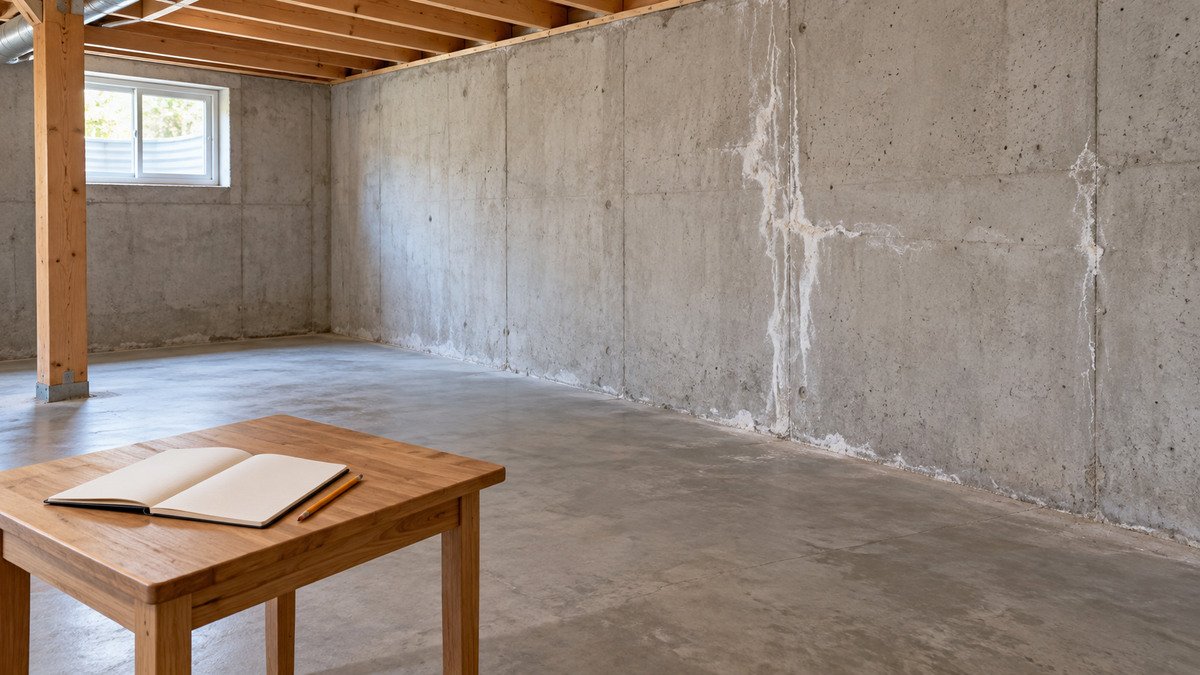
Efflorescence on basement walls is a useful moisture clue, but it cannot answer every question about the wall. Record changes, keep uncertain identification separate from confirmed findings and choose work that addresses the assessed condition. That gives you a clearer basis for a repair decision than treating the deposit’s appearance alone.
Frequently asked questions
Can efflorescence remain after a basement wall dries?
Yes. Salts are left at the surface as water evaporates, so an existing deposit can remain visible on a dry-looking wall. Its presence alone does not date the moisture or establish that wetting has stopped.
Does efflorescence mean the foundation is failing?
The deposit alone does not establish structural failure or stability. Record other changes, such as displacement, bowing or deterioration, and have those assessed on their own merits rather than judging the structure from a white mark.
Can deposits appear without a visible crack?
Yes. Moisture can move through porous concrete or masonry, so a large visible opening is not required. The absence of a visible crack does not identify the source or tell you which treatment is appropriate.
Will a dehumidifier resolve the cause?
A dehumidifier can help manage indoor humidity. It does not establish why salts appeared or replace an assessment of water moving through a wall. Humidity management and an identified water-entry problem may require different actions.
Should you paint over the deposits before an assessment?
Keep the condition visible until any outstanding moisture questions and preparation requirements have been addressed. Ask how the wall will be assessed and what is required before the intended finish is applied; there is no universal waiting period that suits every wall.