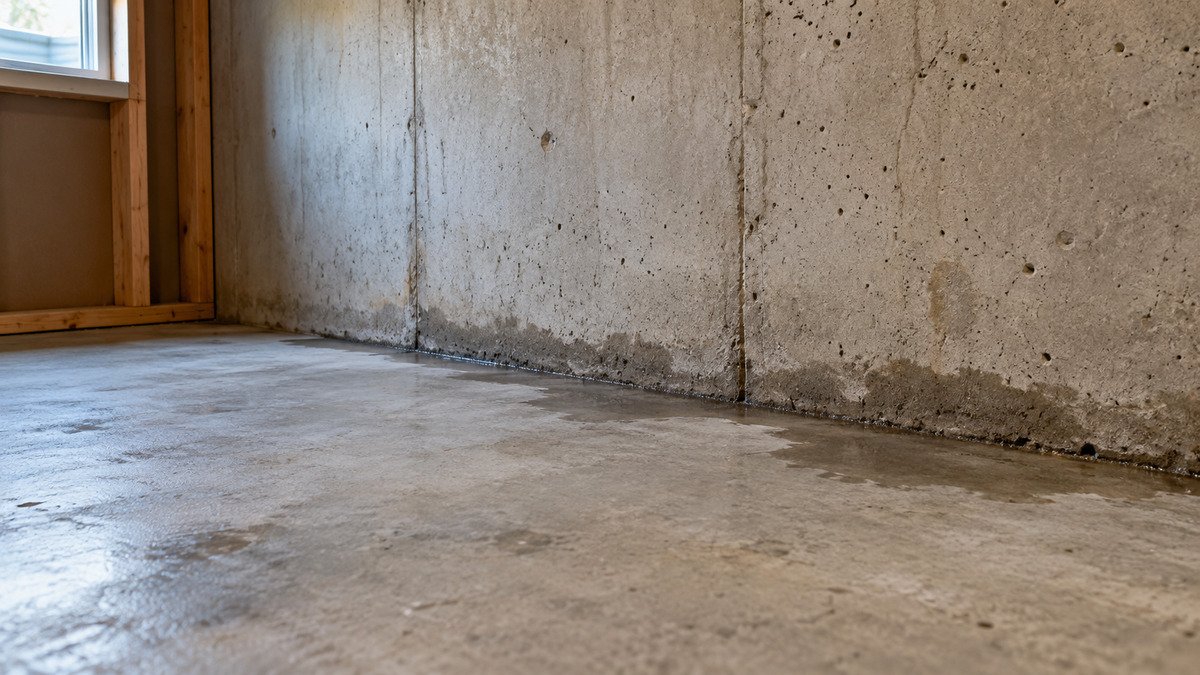
Water seeping through basement floor concrete can involve an opening in the slab or moisture moving through porous material. A wet patch can also come from condensation, plumbing or water travelling from another location. The useful first question is where the moisture appeared before it spread.
This guide helps Toronto and GTA homeowners describe a floor-level problem and understand what needs checking. If your immediate concern is water following a storm, start with our guide to a basement leaking after rain.
Water seeping through basement floor: where does it start?
The visible wet area is the starting point for an assessment. Water may emerge at a crack or junction, move through concrete, or reach the floor from another part of the room. Establishing that route helps determine which part of the building needs attention.
Concrete can carry moisture in different ways
A slab is the concrete floor itself. Moisture can move through its small pores by capillary action, while water vapour can also pass through concrete. Liquid entry through an opening is a different mechanism. The University of Minnesota Extension explains these basement moisture mechanisms.
These distinctions matter when someone describes the floor as “leaking.” Ask whether they mean visible liquid emerging at a specific point, a generally damp surface, or moisture found beneath a floor covering. Those observations should not be treated as interchangeable in a repair proposal.
Groundwater and drainage conditions can contribute
Rainwater and seasonal groundwater can leave the soil around and beneath a basement wet. Poor grading, downspout problems or ineffective foundation drainage can allow water to collect near the building instead of moving away.
The City of Toronto lists failed foundation drains, also called weeping tiles, and sump pumps among possible causes of basement water entry. Where water reaches an opening at floor level, it may enter through that route.
An assessment should therefore consider the water around and beneath the slab as well as the visible crack or joint. These possibilities do not establish that your home needs a particular drainage system.
The floor and foundation wall need separate attention
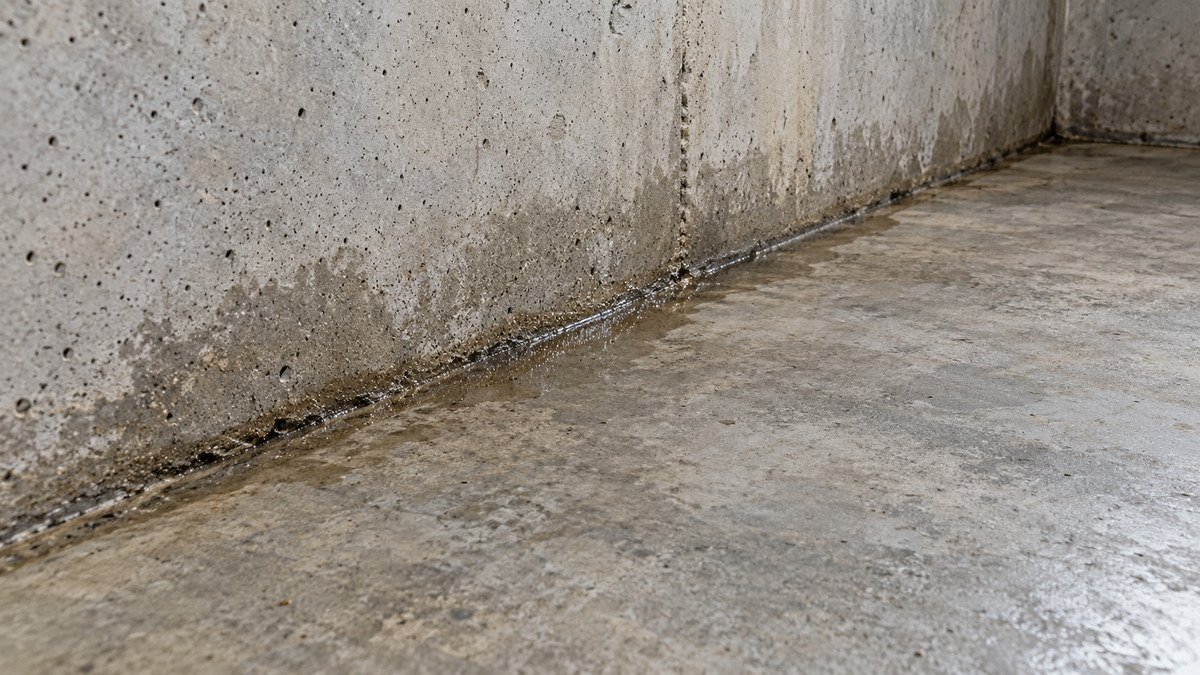
Identify whether the concern involves the slab, the wall, or their junction. The wall-floor junction is often called the cove joint. Seeing moisture there gives the assessor a location to examine; it does not establish which repair will suit the property.
Take one photograph showing the room and another showing the affected area, if access is safe. Leave enough context to distinguish a floor crack from a wall crack that ends near the floor. A tightly cropped image can hide that difference.
What does the location of the wet area tell you?
Location helps narrow the investigation, but a puddle may extend beyond its source. Describe the earliest wet point you actually observed and how the area changed. If you found it after water had spread, say that the starting point is unknown.
Use the table to organise observations for an assessment. The possible explanations are questions to investigate, not diagnoses.
| Wet location | Question to investigate | Useful detail | Limit of the observation |
|---|---|---|---|
| Along a slab crack | Is liquid emerging here? | Where the damp line first appeared | A wet crack alone does not identify the full route. |
| At the wall-floor junction | Does water emerge at the junction or reach it from the wall? | A view of both surfaces | The location does not select a waterproofing system. |
| Across the surface | Could surface condensation contribute? | Timing and other damp surfaces | A broad pattern is not proof of condensation. |
| Beside plumbing or equipment | Is water reaching the floor from a nearby source? | Any observed dripping or connection with use | Proximity alone does not confirm a plumbing leak. |
| Around a floor drain | Did water rise from the drain? | What was visible from a safe location | Water beside a drain does not establish its direction. |
Describe what was visible beneath a floor covering
If moisture was discovered during other work, record which layers were already exposed: the floor finish, underlay or concrete. Explain who opened the area and what they observed. Do not assume a mark on the underside of flooring identifies the entry point in the slab.
Leave concealed conditions for the assessment to resolve. There is no need to remove additional finishes simply to make an initial enquiry; agree on any investigative access before work starts.
Can condensation look like floor seepage?
Yes. Condensation forms when moist air meets a sufficiently cold surface, so moisture can appear on the exposed face of a basement floor. A wet surface alone cannot tell you whether moisture formed there or arrived through another route.
Health Canada’s moisture guidance distinguishes condensation, plumbing leaks and water entering through the building. It also recommends using a dehumidifier where needed to manage indoor humidity. Humidity control should accompany investigation when water keeps returning.
Keep humidity readings in context
If you already use a humidity monitor, include its readings and location in your notes. Also describe whether cold pipes or other surfaces were damp at the same time. That gives an assessor more context than the statement “the whole basement feels wet.”
A reading taken once should not become a verdict about the floor. Ask how any measurements relate to the visible pattern and whether another source still needs checking. Likewise, a drier room after dehumidification does not, by itself, establish that every water-entry route has been resolved.
Need help understanding recurring floor-level moisture? Call Aftermath Crack Fix at (647) 448-9123 for a free quotation and discuss a basement and foundation waterproofing assessment. Tell us where moisture appears and whether the concrete is exposed or covered.
Why might sealing a visible gap leave the problem unresolved?
A repair needs to address the identified water route and the conditions around it. Closing a visible opening does not establish that nearby moisture has the same source. Ask which observed problem the proposed treatment is intended to correct.
Interior coatings can leave the underlying moisture source in place, as the University of Minnesota guidance explains. Before accepting a surface treatment, ask how the assessment supports it and what happens to water outside the treated area.
Keep a wall-crack repair within its scope
Aftermath’s foundation crack repair service covers polyurethane and epoxy injection for suitable cracks in poured-concrete foundation walls. The fact that a wet floor is nearby does not establish that a wall injection will address it.
Ask the assessor to identify the connection between the wall crack and the floor moisture. If that connection is uncertain, have the uncertainty recorded rather than treating the proposed crack repair as an answer to every damp area.
A wider water-entry problem may need a separate basement waterproofing scope. Any drainage, plumbing or other work under discussion should be clearly identified, including who is responsible for assessing and carrying it out.
What should be checked before choosing a repair?
The assessment should connect the floor symptoms to a supported explanation and a defined scope of work. Ask what has been established, what remains concealed, and whether another trade needs to investigate. This is especially useful when more than one wet location is involved.
Ask for a floor-specific explanation
- Entry point: Where is water believed to reach the floor, and what observation supports that?
- Surface involved: Does the recommendation concern the slab, a wall crack, the wall-floor junction or another source?
- Existing work: Could an earlier patch, coating or repair affect the investigation or access?
- Unanswered questions: What still needs checking beneath or behind finishes?
- Scope boundary: Which wet locations are included, and which remain outside the proposed work?
These questions make a quotation easier to assess without asking you to select a technical system yourself. If two recommendations address different locations or mechanisms, clarify that difference before comparing their totals.
Recognise when a plumbing investigation belongs in the next step
The City of Toronto distinguishes foundation and drainage problems from sewer backups. Its guidance suggests a licensed plumber’s assessment when the property’s plumbing or sewer arrangements are unclear. Tell the assessor if you actually saw water rising from a drain, rather than only finding water beside it.
If a sewer backup is suspected, Toronto advises avoiding toilet and sink use unless absolutely necessary until the issue is resolved. In Toronto, report basement flooding to 311; elsewhere in the GTA, use the appropriate local municipal service. Stay out of water where electrical safety is uncertain, and contact the electrical utility if water is near the panel or outlets.
Also describe any observed displacement or change in the concrete. Our article on when to worry about foundation cracks explains how to communicate those concerns. A proposed leak treatment should not be taken as an assessment of structural movement.
What should happen before the floor is covered again?
Agree how the moisture concern will be reviewed before it becomes concealed. The person repairing the problem and the person installing the floor may have different responsibilities. Make those responsibilities explicit while the relevant surfaces remain accessible.
Health Canada advises addressing the cause of a moisture problem and seeking professional help when that cause or the required corrective action is unclear. Covering the affected area should not close an unanswered investigation.
Request a clear handover
- Identify the work completed. Keep the treated location and agreed scope in the record, including any area left for further assessment.
- Confirm the review still required. Ask what checks apply before covering, who performs them and what result is needed.
- Obtain the relevant flooring requirements. Have the flooring installer explain the substrate conditions required for the selected system. Do not substitute a generic online waiting period.
- Agree on access and reinstatement. Confirm who opens or restores finishes if further work is needed.
Retain photographs of the exposed area, the repair documents and the relevant contact details. If moisture returns, identify whether it is at the treated location or somewhere else; that distinction will help the next conversation.
Why Aftermath Crack Fix?
Aftermath Crack Fix provides foundation crack repair and basement/foundation waterproofing in Toronto and the GTA. We discuss the observed condition, access and proposed scope. Suitable poured-concrete wall cracks can be repaired from inside without exterior excavation.
Free quotations are available. Eligible crack repairs carry a lifetime warranty while the original customer owns the property, subject to the written terms. That coverage applies to the eligible repair; it does not cover every floor-moisture problem or provide a whole-basement or structural guarantee.
Start with the floor problem you can describe. Call (647) 448-9123 or request a free quotation. Include the property postal code so we can confirm availability, along with the wet location, timing and any previous repair.
Conclusion
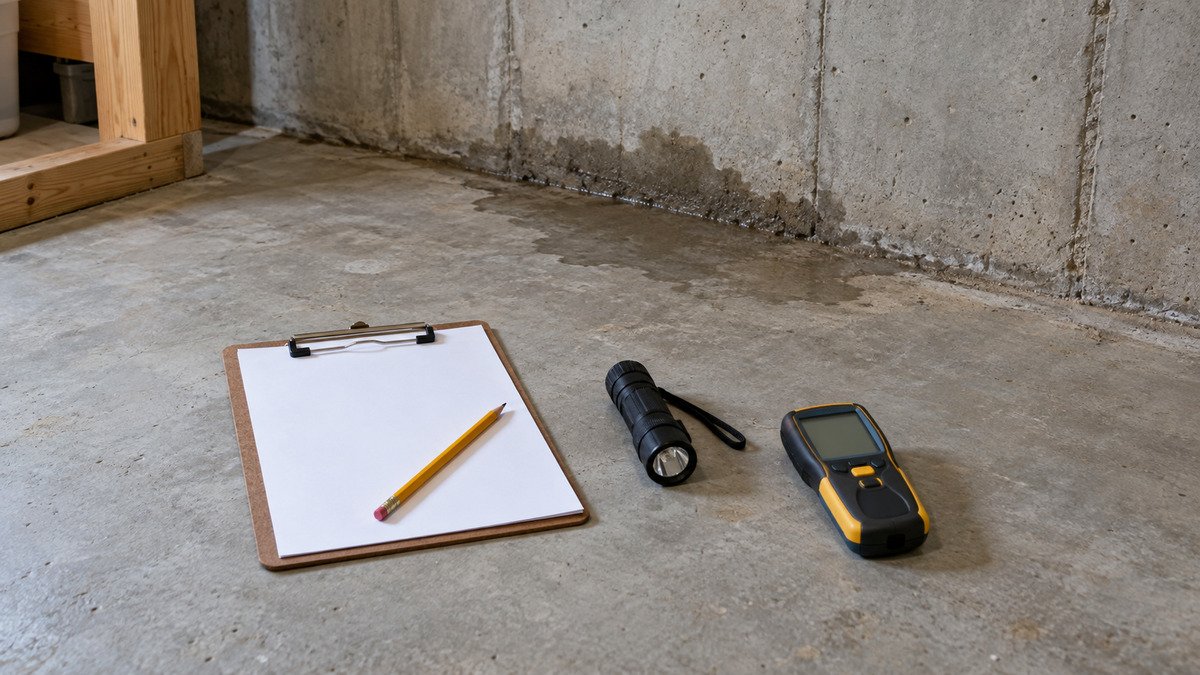
Water seeping through basement floor concrete calls for a clear explanation of the route before a repair is selected. Record the wet location without assuming it identifies the source, and ask how the proposed work relates to that evidence.
Keep any remaining plumbing, concealed-area or movement questions visible in the plan. Before the floor is covered again, agree what must be checked and who is responsible.
Frequently asked questions
Can water come through a concrete basement floor?
Yes. Liquid can enter through openings, and moisture can move through porous concrete. An assessment still needs to establish whether the moisture on your floor came through the slab or arrived another way.
Why is water appearing where the basement wall meets the floor?
That junction is a location to investigate, rather than a diagnosis. Describe whether water was seen emerging there or whether the area was already wet when discovered. A view of the adjoining wall and floor helps preserve useful context.
Can a wet basement floor be condensation?
Yes. Moisture can condense on a sufficiently cold floor surface. Include humidity readings and observations of other damp surfaces if available, but ask how those details fit the full moisture pattern before treating them as the answer.
Will sealing a visible floor crack stop the water?
That cannot be established from the visible crack alone. Ask which water route has been identified and why the proposed treatment suits it. A wall-crack injection proposal should also explain any claimed connection to the wet floor.
When does a wet floor need a plumbing assessment instead?
Describe any observed water rising from a drain, dripping from plumbing or appearing in connection with fixture use. Toronto recommends a licensed plumber’s assessment when the property’s plumbing or sewer arrangements are unclear. Plumbing and foundation questions may both need attention.