For Toronto and GTA homeowners whose poured-concrete crack has been assessed as suitable for injection, this guide explains how to compare the proposed methods. It does not diagnose the condition of your foundation.
Epoxy vs polyurethane crack injection: what changes?
The useful distinction is the performance the repair is intended to provide. A bonding repair aims to reconnect the cracked concrete, while a leak-sealing repair aims to close a water-entry path. Your quotation should explain the intended result before it names a resin.
What injection puts inside the crack
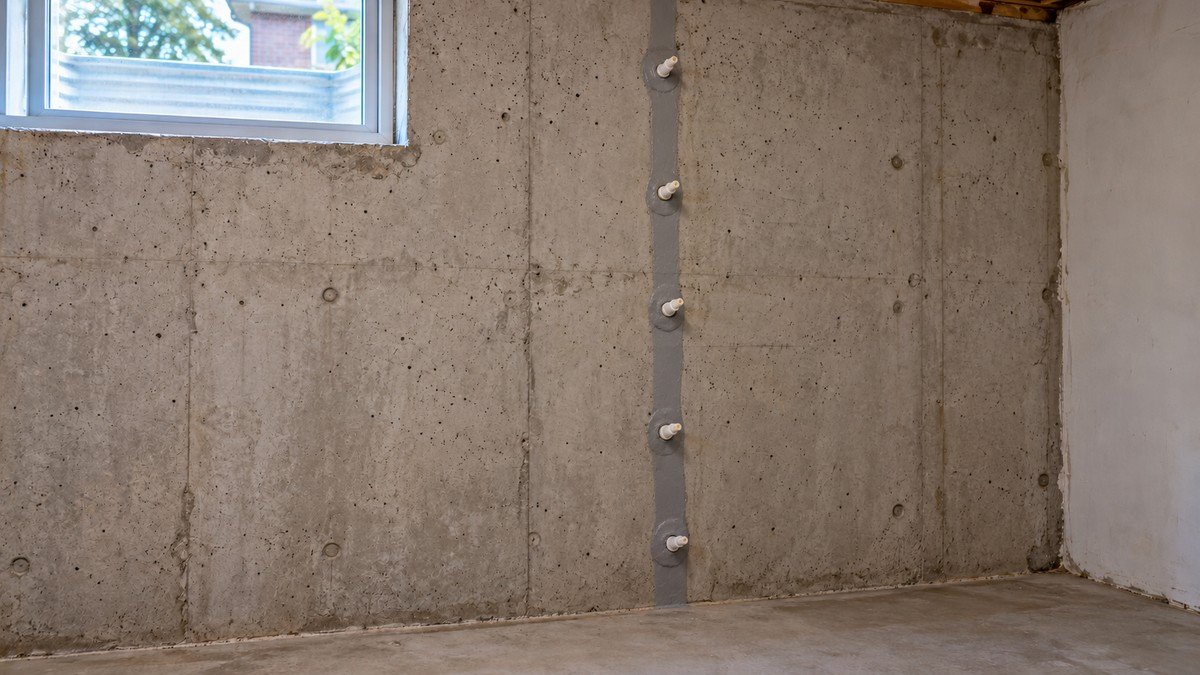
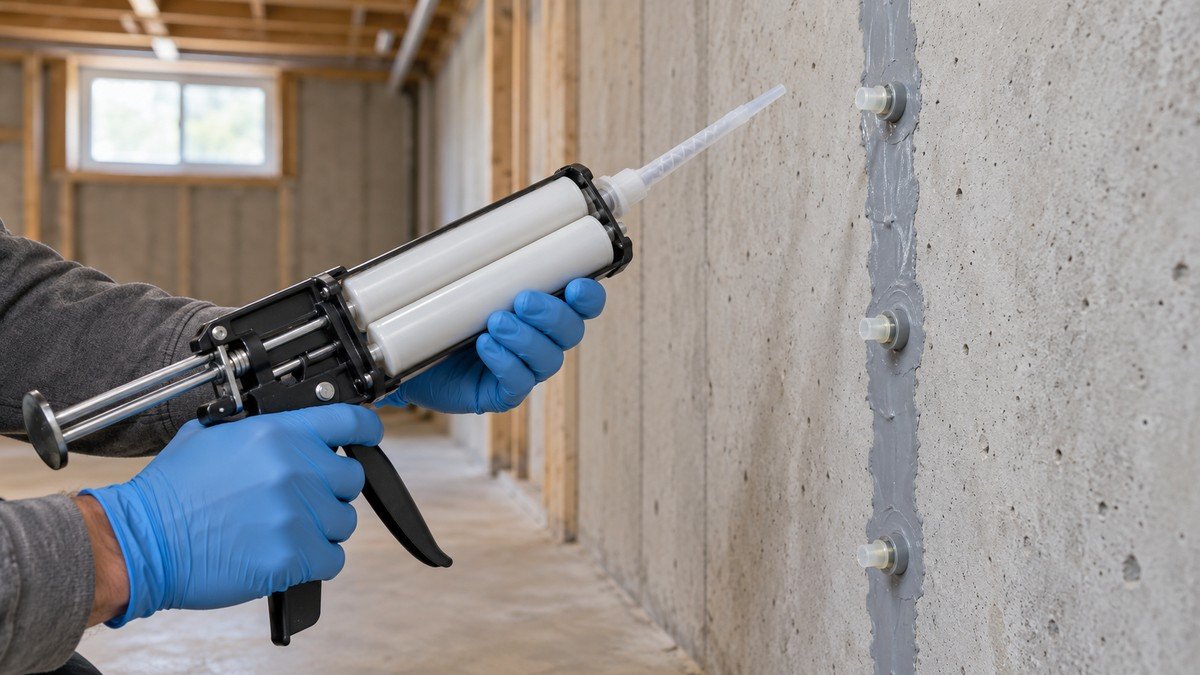
A resin is the material introduced into the crack and allowed to cure, or harden through a chemical reaction. Injection places that material within the crack. An exposed strip of paste or sealant on the wall may be part of the injection process, so the visible surface alone does not explain what work was performed inside.
The table below compares common reasons these systems are discussed. It is a starting point for reviewing a recommendation, not a specification for every epoxy or polyurethane product.
| Decision point | Epoxy injection | Polyurethane injection |
|---|---|---|
| Common repair objective | Bonding concrete across a suitable crack | Sealing a leaking crack with a suitable injection system |
| Movement question | Is a rigid bonding repair appropriate? | What movement can this specific formulation accommodate? |
| Moisture question | Does the epoxy meet the crack’s moisture conditions? | Does the system suit the actual water conditions? |
For either material, request the product identification and the reason it fits the repair objective. The table should help you compare those explanations for your wall; it cannot determine the product or repair scope on its own.
When is epoxy injection the right fit?
Epoxy injection may fit a repair where bonding the concrete across a suitable crack is required. The condition of the crack and the selected epoxy must support that objective. A structural repair claim needs a defined basis beyond the word “epoxy” on an estimate.
The American Concrete Institute’s overview of epoxy in concrete identifies epoxy as an adhesive used to bond concrete. It also describes many other uses, including coatings and repair materials. That variety is a useful reminder to ask for the actual injection product instead of assuming all materials sold as epoxy serve the same purpose.
When a contractor proposes epoxy, ask them to explain the bonding objective in everyday language:
- What part of the repair relies on that bond?
- How does the assessed condition of the crack support the recommendation?
- If an engineer has specified the work, how does the proposed method follow that specification?
Does epoxy require a completely dry crack?
Not every epoxy is limited to completely dry concrete. ACI’s field guide to epoxy injection discusses considering a moisture-tolerant epoxy when a crack remains damp. It also cautions that later movement can make epoxy repair unsuitable. These are reasons to check the actual product and site conditions, rather than rely on a simple “epoxy is always dry-only” rule.
Ask the contractor to distinguish a damp surface from water flowing through the crack. Then ask which condition the chosen product and installation procedure allow. A recommendation for one condition should not be silently carried over to another.
Useful wording to request is: “The proposed epoxy is suitable for the observed conditions because…” The explanation should connect the material to your repair, rather than leave you comparing product-strength claims you cannot relate to the wall.
When might polyurethane injection be preferred?
A suitable polyurethane injection system may be preferred when the agreed objective is to seal a leaking crack. Some leak-sealing formulations offer flexibility that is useful for the conditions they are designed to accommodate. The contractor should identify those properties for the chosen system; “polyurethane” alone does not establish them.
In its repair-material selection FAQ, ICRI discusses a homeowner receiving competing epoxy and polyurethane recommendations for a leaking foundation crack. The answer distinguishes the bonding purpose of epoxy from the flexibility and wet-concrete suitability of the polyurethane chemical grout discussed there.
This is general guidance from 2010, so the current product documentation remains essential when applying the comparison to a particular repair.
For your quotation, ask:
- Is this proposal intended to stop water entering through this crack, and what conditions is it designed to handle?
- If the explanation includes movement, what is the scope of that allowance?
A flexible repair recommendation should not leave you assuming it addresses an underlying movement problem.
Injected resin and a surface seal are different proposals
The same ICRI guidance distinguishes polyurethane injected into a crack from sealant spread over its inside face. Ask where the repair material will be placed. That detail helps you understand whether two quotations are describing the same kind of work.
Also ask whether the visible material will remain after the repair and what finish you should expect. An unfinished concrete wall and a wall that will later be concealed can have different appearance priorities. Agree on the outcome beforehand, rather than assume a smooth, paint-ready surface is included.
An epoxy vs polyurethane crack injection comparison should help you evaluate the recommendation without choosing a chemical formulation yourself. Ask why the system matches the agreed objective and what the contractor will consider a completed repair.
Want to discuss a suitable foundation crack? Call Aftermath Crack Fix at (647) 448-9123 for a free quotation. Our foundation crack repair service includes discussing the proposed method and access, with interior treatment where conditions allow.
Which site conditions should guide the choice?
Movement, moisture, crack geometry and access can change which injection system is appropriate. The recommendation must also account for the condition of the concrete and any earlier repair. These factors make an epoxy vs polyurethane crack injection decision specific to the crack being treated.
Movement and the intended bond
ACI’s epoxy-injection guidance warns that subsequent movement can make epoxy repair unsuitable. Ask whether the proposal assumes the crack is stable and how that assumption was established. If a flexible leak-sealing system is proposed instead, ask what movement its documented properties can accommodate. Sealing a water path does not establish that the cause of movement has been resolved.
When a bonding repair has been specified, the contractor should explain how the proposed system meets that objective. A material described as flexible is not automatically an acceptable substitute simply because the crack also leaks.
The actual moisture condition
Clarify whether the assessment found a dry crack, damp concrete or water flowing through the crack. Those descriptions should appear in the product-selection conversation. Ask which conditions the chosen resin and any associated surface-sealing materials permit, rather than applying a dry-versus-wet rule to an entire resin family.
If the site conditions change before installation, ask the contractor to check whether the specified system still applies. The product’s current documentation should govern that decision.
Crack geometry, flow and access
Viscosity describes a material’s resistance to flowing. ACI relates epoxy viscosity selection to crack size, the thickness of the concrete section and injection access. These considerations help explain why two jobs may use different products or installation approaches even when both are described as epoxy injection.
Ask how the proposed approach addresses the crack through the wall, including any limits on access. Avoid comparing repairs by the number of visible ports or the appearance of the surface strip alone. Neither gives you the contractor’s explanation of how the selected system will reach the area intended for treatment.
Surface condition and previous work
ACI also addresses preparation so the injection system’s surface seal can adhere. Ask whether coatings, old patches or previous repair material affect the proposed preparation. For a concealed wall, agree who creates access and restores finishes.
Keep the recommendation tied to the identified crack. Any wider basement and foundation waterproofing needs should have a separately explained scope.
How should you compare crack-injection quotations?
Start an epoxy vs polyurethane crack injection comparison by checking whether the proposals have the same repair objective. A bonding proposal and a leak-sealing proposal can address different requirements, even when they identify the same visible crack. The material name becomes meaningful only when you understand the intended outcome.
Read two illustrative proposals
Compare these simplified examples. They are not actual Aftermath quotations or specifications:
- Proposal A: “Epoxy injection to bond the concrete across the identified crack.”
- Proposal B: “Polyurethane injection to seal water entering through the identified crack.”
The first proposal gives bonding a central role. The second identifies water control as its purpose. Before deciding between them, establish whether the assessment called for bonding, leak sealing or both. If an engineering specification exists, use it to clarify that requirement with the responsible professional.
A homeowner whose question is “Will this stop water through the crack?” still needs to know why the first contractor proposes bonding. A homeowner given a specified bonding repair needs to know whether the second proposal satisfies that requirement. Neither quotation should be assumed to answer a question it has not addressed.
Compare the technical reasons, not just the labels
- Check the shared starting point. Confirm both contractors are considering the same crack, earlier repairs and assessment findings. A difference in available information may explain a difference in recommendations.
- Identify the proposed system. Ask for the product or system name, not only “epoxy” or “polyurethane.” If a product has yet to be selected, ask what condition will determine that choice.
- Connect it to the conditions. Ask how the system suits the observed moisture and movement assumptions. Where access is limited, ask how that limitation is addressed in the installation approach.
- Define the completed result. Ask what the repair is intended to achieve at the treated location and how completion will be reviewed. Clarify whether a claimed bonding result follows a separate specification or review requirement.
Then compare the common practical scope:
- Preparation, access and finish responsibilities.
- Any exclusions.
- The written warranty for the identified repair.
These details still matter, but they cannot resolve a disagreement about the purpose of the repair.
If the explanations remain inconsistent, ask the contractors to address the difference directly before choosing. An unresolved question about the required performance needs clarification; a lower total or a stronger-sounding material name does not answer it.
What should you confirm before closing the wall?
Before covering the treated area, confirm the product-specific instructions and the agreed review of the injection repair. The handover should identify the system used, where it was applied and any outstanding inspection or finishing requirements. Do not substitute a generic online curing time for the instructions attached to your job.
Use these injection-specific questions to close out the work:
- Was the specified system used? Ask the contractor to identify it and explain any agreed change from the proposal.
- Which crack area was treated? Have the location and extent identified while the work is still exposed, including any part left outside the agreed scope.
- How was completion reviewed? Ask what checks were agreed for this repair and whether they are complete. For a specified structural objective, clarify any remaining review by the responsible professional.
- What must happen before covering? Confirm the product-specific readiness instructions and whether anyone still needs access. Pass those instructions to the person reinstating the wall.
- What surface finish remains? Clarify whether ports or surface-sealing material will stay and whether removal or cosmetic work was included.
The visible surface finish should not be treated as proof of the result inside the crack. ACI’s guidance distinguishes the surface seal used during injection from the injected repair, and discusses separate checks for the repair itself. Ask which completion checks apply to your agreed scope rather than assuming a smooth patch demonstrates the intended bond.
Keep the written repair and warranty details, and confirm whom to contact if water is later observed at the treated location.
Why Aftermath Crack Fix?
Aftermath Crack Fix offers polyurethane and epoxy injection for suitable poured-concrete foundation cracks in Toronto and the GTA. We discuss the assessed conditions, the proposed method and the access needed before agreeing on the repair scope. Suitable cracks can be treated from inside without exterior excavation.
Free quotations are available. Eligible crack repairs carry a lifetime warranty while the original customer owns the property, subject to the written terms.
The coverage applies to the identified repair and does not promise whole-basement waterproofing or structural restoration. Review the eligibility and terms provided with your quotation.
Get a clear recommendation for your crack. Call (647) 448-9123 or review our foundation crack repair options and written warranty to start a free quotation. Tell us about access and any previous repair so we can discuss the next step.

Conclusion
For epoxy vs polyurethane crack injection, epoxy is commonly considered where bonding the concrete is required; a suitable flexible polyurethane system may be preferred for leak sealing. The actual selection remains specific to the product, repair objective and assessed conditions.
Ask how the recommendation accounts for movement, moisture and access, then compare what each proposal is intended to achieve. A leak-sealing result does not resolve an underlying movement issue by itself, and the name of a resin does not establish the performance of the completed repair.
Frequently asked questions
Is epoxy or polyurethane better for a leaking foundation crack?
Epoxy is commonly considered when concrete bonding is required; a suitable flexible polyurethane system may be preferred for leak sealing. Confirm the actual product and assessed conditions support the recommendation. Sealing water entry does not, by itself, address the cause of ongoing movement.
Can epoxy injection be used on a damp crack?
A moisture-tolerant epoxy may be considered for a damp crack, as discussed in ACI’s epoxy-injection guidance. Suitability still depends on the selected system. Ask whether the contractor has allowed for the actual moisture conditions, including any flowing water.
Does polyurethane injection always provide a flexible repair?
Do not assume flexibility from the material name. Ask for the proposed product’s stated properties and their relevance to the assessed crack. The recommendation should explain the conditions it can accommodate and the limits of the repair.
Is sealant over a crack the same as crack injection?
No. Ask whether the proposed material will be injected into the crack or applied only to the exposed surface. A surface seal can also form part of an injection procedure, so a finished photograph alone may not establish what was done.
Can a previously injected crack be repaired again?
The next method needs a review of the existing repair and current conditions. Share any invoice, product information and history of when the issue returned. Ask what the new proposal will address and whether earlier work affects the scope or access.
Does a lifetime crack-repair warranty cover the whole basement?
Aftermath’s lifetime warranty applies to eligible crack repairs identified in the written agreement while the original customer owns the property. It is not whole-basement or structural coverage. Read the written terms for the covered repair and the process for reporting a concern.