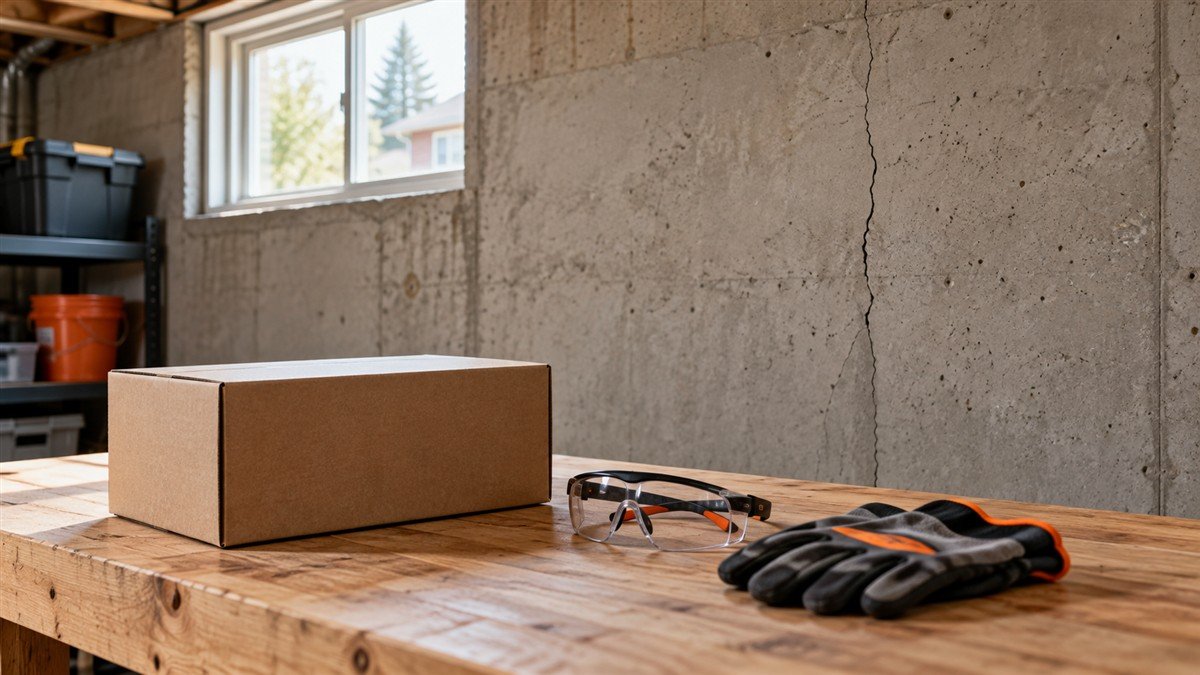
DIY foundation crack repair starts with deciding whether the proposed kit fits the wall and the repair you actually need. A kit may offer a way to apply material, but it cannot establish the cause of a crack or confirm that the surrounding foundation is sound. Get advice before starting if the crack leaks, changes, has already been repaired or leaves you uncertain about the right approach.
This guide helps Toronto and GTA homeowners work through that decision before buying materials. It focuses on suitable nonstructural repairs, product instructions and responsibility for the result, so you can ask useful questions about a kit or a professional repair. Suspected structural damage or wall movement needs a structural engineer and an appropriate repair plan before work begins.
What are you asking DIY foundation crack repair to do?
Start with a clearly defined nonstructural repair objective, such as sealing an assessed water-entry route or addressing a suitable surface defect. This guide does not cover DIY structural repairs. If structural damage or continuing movement is suspected, consult a structural engineer and follow an appropriate repair plan. A neat-looking patch does not, by itself, verify work hidden within the wall.
The American Concrete Institute’s 2003 epoxy-injection field guide puts assessment of the cause and repair objective before material selection. It also explains that continuing movement can make an epoxy repair unsuitable. That is a reason to establish what the job requires before following a generic repair video.
For example, a homeowner may want to stop water at one visible crack. The unanswered questions are whether water is entering there, whether that crack is suitable for the proposed treatment and whether another concern needs attention. Buying a product labelled for concrete does not answer those questions.
If the material choice is already part of an assessed repair plan, our epoxy versus polyurethane crack-injection guide explains the different repair goals. Here, the decision is whether you have enough information to take on the proposed work yourself.
Which wall and crack checks come before buying a kit?
Confirm the wall construction, the condition of the affected area and what is known about the crack. Include water entry and previous work in that discussion. If a key detail is unknown, take the question to someone qualified to assess it rather than treating the missing information as a match.
| Check | Question to resolve | What to bring |
|---|---|---|
| Wall construction | Does the proposed use cover this wall material? | A clear view of the exposed wall, if accessible |
| Water and change | Does leakage or a changing crack need assessment first? | Dates and photographs of what you observed |
| Earlier work | How does the existing material affect the next step? | Product names, invoices or an honest statement that they are unknown |
| Access | Can the specified work be done with the available access? | A wider photograph showing finishes and obstructions |
The Government of Canada’s foundation-maintenance guidance recommends professional advice before undertaking repairs and calls for help with growing cracks, water seepage and unexplained leaks. Do not use a single width measurement as permission to proceed. Our guide to foundation cracks that need closer assessment covers that separate condition-assessment question.
Aftermath’s foundation crack repair service focuses on suitable cracks in poured-concrete foundation walls. That description should not be extended automatically to block-wall mortar joints, floor cracks or a wall showing movement.

What should the product information explain?
The product information should let you check the proposed use against the assessed job. Read the current instructions and safety information before opening or mixing anything. If you cannot identify the exact product or understand a requirement, ask the supplier for clarification before proceeding.
- Intended use: Which wall materials, crack conditions and repair objectives are included or excluded?
- Site conditions: What does the manufacturer specify about moisture, temperature, access and existing surface material?
- Complete system: Which components and equipment are required, and which are supplied separately?
- Working sequence: Are preparation, application and waiting requirements clear for that particular system?
- Safety and storage: What do the instructions and safety data sheet require for handling, ventilation, protection and cleanup?
- Support: Who answers a suitability question, and what does any written product warranty actually cover?
ACI’s field guide identifies moisture tolerance, working life, safety information and site precautions as relevant considerations for epoxy work. Its professional guidance is not a substitute for the instructions supplied with a different product. Avoid combining a step from one video with materials from another system unless the manufacturer expressly supports that combination.
Keep a copy of the instructions that came with the product. A saved shopping description or a label such as “professional grade” gives you less useful information than the exact system requirements and a clear answer about your wall.
What can you prepare before starting a repair?
You can organise the information and access questions without changing the crack. Record the wall location, known repair history and the exact product you are considering. This makes a suitability discussion more useful and avoids losing the original view beneath new material.
Take a wider photograph and a close view from a safe, accessible position. Keep people, addresses on paperwork and other private details out of the images. Say whether the wall is exposed or covered; do not remove finishes simply to improve a photograph.
Write down the questions you still need answered. An illustrative note might read: “I have a repair kit, but I do not know what the old patch contains or whether the kit is intended for this previously repaired area.” That gives the supplier or contractor a precise issue to resolve.
If you are discussing work with a contractor, agree who will clear the area, protect nearby belongings and deal with finished surfaces. Preparing the space should follow the agreed plan. It does not mean grinding, drilling, widening the crack or adding another coating in advance.
What if an earlier DIY repair starts leaking again?
Have the affected area assessed before repeating the same application or adding another product. Water after a repair does not establish, on its own, whether the material failed, the original scope was incomplete or water is arriving elsewhere. Preserve the repair history so the next assessment can consider what is already in place.
Keep the packaging or product name, approximate application date, instructions used and any photographs taken before the repair. Describe what you actually saw when moisture returned. “The floor below the patch was wet” is a different observation from “I saw water emerge through the treated crack.”
If someone else carried out the earlier work, contact them with the records and ask how the concern is assessed under the written terms. Do not assume another layer is required, that the whole basement needs replacement work or that an interior approach is now impossible. Those are decisions for the assessed condition.
How should you compare DIY with a quoted repair?
Compare the complete task and who takes responsibility for each part of it. A kit purchase and a contractor’s quotation may cover different things. Put assessment, preparation, application, checking the result and follow-up beside each option before judging the price difference.
For a DIY option, list the questions you must resolve yourself and the support actually offered by the supplier. For a contractor option, ask which treated location, work and follow-up are included in writing. A professional quotation still needs a clear scope; the name of the option alone is not evidence of what is covered.
Our foundation crack repair cost guide explains how to compare quotation inclusions. No kit price or typical saving is assumed here. Your decision should reflect the assessed job, your ability to meet the specified requirements and the responsibilities you want the agreed repair to include.
Why Aftermath Crack Fix?
Aftermath Crack Fix offers foundation crack repair and basement/foundation waterproofing in Toronto, the GTA and surrounding areas. Free quotations explain the proposed work and its limits. Suitable poured-concrete wall cracks may be repaired from inside where conditions allow.
The written lifetime warranty applies to eligible crack repairs for as long as the original customer owns the property. It is non-transferable unless separately agreed in writing. That coverage applies to the eligible repair, not every basement leak, structural concern or independently purchased DIY product.

Make the suitability decision before opening the kit
DIY foundation crack repair is a decision about a suitable nonstructural job, the exact product requirements and who will take responsibility for the work. Resolve the unknowns before applying material. A clear answer about suitability is more useful than a quick purchase followed by a second unexplained patch.
Frequently asked questions
Can I repair a foundation crack myself?
Only consider DIY work where a nonstructural repair is suitable for the assessed condition and the exact product. Get professional advice before starting, particularly with leakage, change or uncertainty about the cause. Suspected structural damage or movement needs a structural engineer and an appropriate repair plan; a small-looking crack or a DIY label does not establish suitability.
Does a foundation crack repair kit work on a block wall?
Do not assume so. Check the exact product’s intended use and have the wall condition assessed. A kit described for cracks in poured concrete should not automatically be used on masonry joints or a different construction.
Is epoxy always the right choice for a DIY repair?
No. Material selection follows the repair objective and conditions. ACI’s guidance notes that later movement can make an epoxy repair inappropriate. Ask how the proposed material fits the assessed job.
Can I apply a new kit over an old repair?
Ask for advice before adding material. Identify the earlier product if possible and explain what changed. Existing repairs and finishes need to be considered in the next method and preparation plan.
Does a kit warranty mean the whole basement is covered?
No such coverage should be assumed. Read what the product’s written terms cover and who provides support. Keep a product warranty separate from a contractor’s warranty for an identified repair.
Sources checked October 10, 2026. The ACI field guide is background on repair assessment, not a current kit instruction sheet. Follow the current instructions for the exact product. All images are AI-generated editorial illustrations.