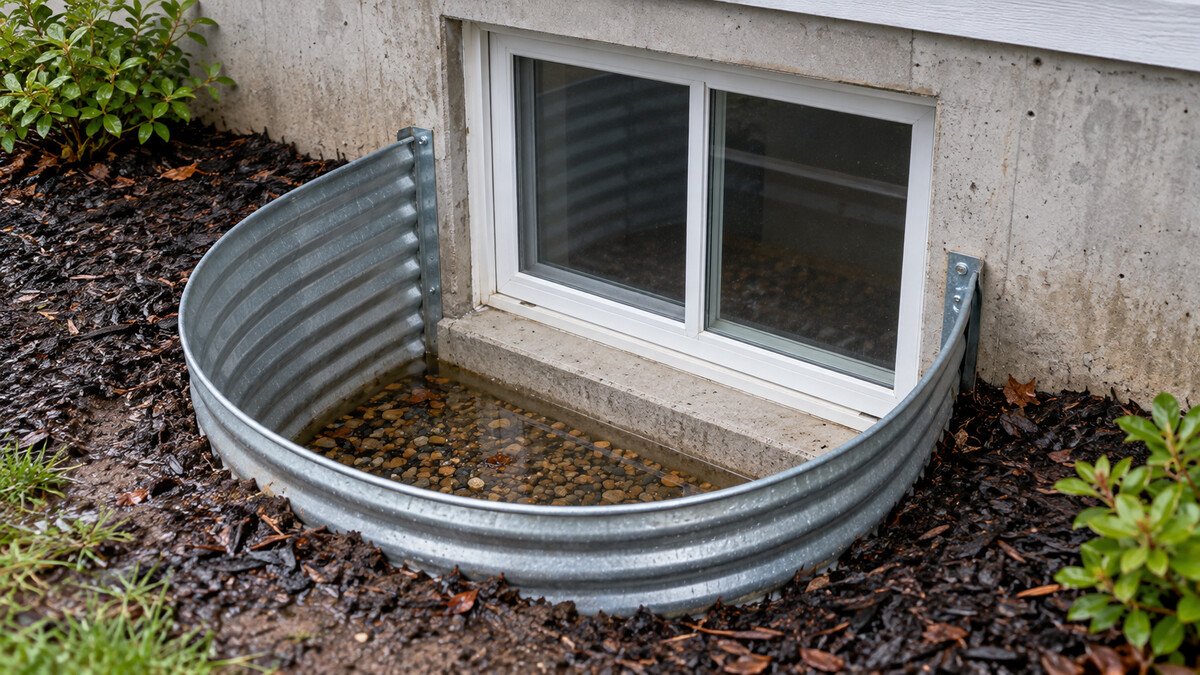
Window well flooding happens when water collects in the recessed space outside a basement window faster than it can leave. The assessment needs to consider both sides of that balance: where the water arrives and how the well drains. A wet window frame does not, on its own, establish that a foundation crack is the cause or that replacing the window will solve the problem.
For Toronto and GTA homeowners, the most useful starting point is the window opening itself, the well outside it and the nearby ground. This guide explains how to organise those observations and ask for a repair scope that addresses what was actually found.
Why does window well flooding happen?
Window well flooding can involve rain or melting snow collecting in a low area beside the foundation. Water may linger where soil drains poorly, debris interferes with drainage, or ice and snow clog a drain. Nearby runoff can add to the water arriving at the well.
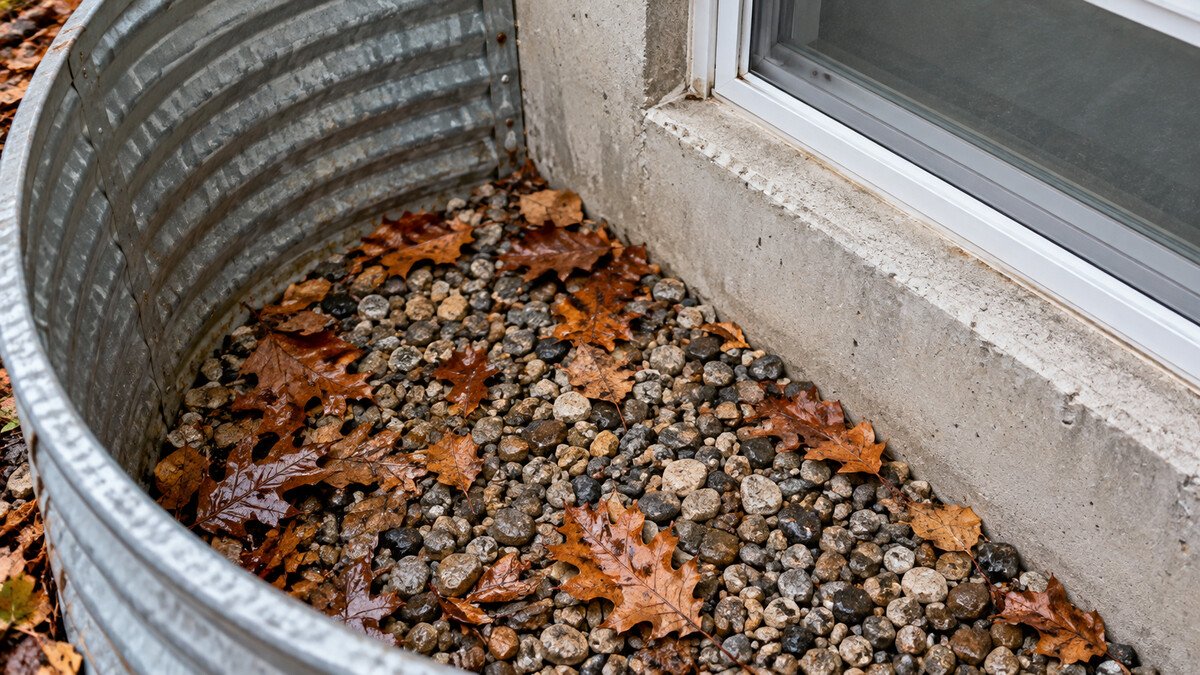
The Government of Canada’s basement window guidance explains that gravel helps water drain into the ground. Some wells also connect to a perimeter drain, sometimes called weeping tile, which is underground drainage around the foundation. Do not assume that connection exists at your property. The guidance also cautions that basement windows are not designed to withstand water building up against them.
For an assessment, keep two questions separate: “Why is the well holding water?” and “Where is water crossing into the basement?” They are related, but an answer to only one may leave part of the problem unexplained. For example, a proposal to repair a window-frame gap should also say whether the observed accumulation outside has been investigated.
If the main concern is a larger storm event with water in several places, our guide to a basement leaking after rain covers the broader response. Here, the focus stays on the well and window opening.
What should be checked around the well?
Look beyond the gravel at the bottom. Nearby ground, roof drainage and the well’s position can help explain how water reaches that opening. An assessor should connect those outdoor observations with the indoor symptom before recommending work.
The City of Toronto’s flood-prevention guidance recommends keeping eavestroughs and downspouts clear and directing drainage away from the foundation without creating problems for neighbouring properties. These are useful items to include in a window-well assessment, rather than assuming that everything begins beneath the gravel.
From a safe, accessible position, note whether a downspout ends nearby, whether water was seen crossing the surrounding ground, and whether leaves or other debris were present. Record an observation as an observation: “Water ran from the paved area toward the well” is more useful than “The drain has failed” when the drain has not been examined.
The University of Minnesota Extension’s basement-moisture guide identifies poorly designed window wells as a possible source of water being directed toward the foundation. Its wider point is to establish the moisture source and route before choosing a solution. Construction details still need to suit the actual property; a general illustration is not a design for your home.
Will a cover, gravel or sealant solve the problem?
Those items address different parts of a window-well problem. A cover can reduce water and debris entering from above, while the condition of the window and the well’s drainage still need checking. Visible gravel alone does not tell you where collected water goes.
Before buying a cover or accepting a sealing proposal, ask what finding supports it. Is the aim to reduce debris, repair an identified gap, or resolve an established drainage problem? A clear explanation should name the condition being addressed and the limitation of that work.
Canada’s guidance also flags emergency-exit requirements where a basement window serves as an escape route. Confirm the applicable requirements before choosing or changing a cover. A drainage improvement should not leave an exit difficult to use.
Similarly, a fresh bead around a frame should not be taken as evidence that water accumulation has been resolved. Ask how the completed work will be checked and what should prompt a follow-up. Avoid treating a hose test, excavation or alteration of a buried connection as a casual homeowner experiment; establish the appropriate assessment first.
What should you record before the assessment?
A useful record shows the outside well and the corresponding indoor area, with dates and plain descriptions. Include what you did not see as well as what you did. That helps prevent a wet patch being mistaken for proof of a particular entry point.
Only take photographs where access is safe. Do not enter floodwater, climb into an unstable well or reach near wet electrical equipment to obtain a better picture. An incomplete record is preferable to an unsafe inspection.
| Observation | Useful record | Question to ask |
|---|---|---|
| Water standing in the well | Photo, date and whether the level changed | How does this well drain, and was that route checked? |
| Water arriving from nearby ground | A wider view showing the observed direction | Does the proposed work address this incoming water? |
| Moisture first noticed at the frame | Which edge was wet and what was visible outside | What evidence identifies the entry point? |
| Water below the window, source unseen | Wall and floor views, with the unseen source stated | What else needs investigation before choosing a repair? |
An illustrative note could read: “Rear basement window, Tuesday morning. Water was visible in the outside well; the inside lower-right frame was damp. I did not see water entering.” That preserves the relationship without claiming a diagnosis. Add any previous work and the date it was done, keeping invoices or warranty documents available.
If only the floor is wet and the window connection is uncertain, our article on water seeping through a basement floor explains why the visible location needs careful interpretation.
Who should assess a recurring window-well problem?
The right assessment depends on whether the unresolved issue concerns the window, water around the foundation, or a drainage or plumbing connection. Explain the observations when booking and ask which parts the visit will cover. One trade’s quotation should not be assumed to cover every part of the opening.
A broken or deteriorated window may need a window professional. Where buried drainage or plumbing is uncertain, clarify whether a qualified drainage specialist or licensed plumber is needed. Toronto’s guidance recommends a licensed plumber when a homeowner does not know whether foundation drains are present or how they connect.
Where a visible poured-concrete wall crack is part of the concern, ask whether it is actually involved in the leak and whether an interior repair is suitable. A crack below a window and water in the well may both deserve attention; neither observation proves that one repair will address both.
If the concern includes a changing crack or wall movement, our guide to when to worry about foundation cracks explains what to document for that separate assessment. Do not let a narrow window-leak discussion leave a wider concern unmentioned.
What should the proposed repair scope explain?
The scope should identify the observed problem, the work proposed and the parts left outside the quotation. Ask how the recommendation follows from the assessment and what evidence is still missing. This makes it easier to compare proposals that may otherwise use similar labels for different work.
- The finding: Which entry route or drainage condition was established, and how?
- The work: Does the quote concern the window, well, nearby water route, foundation crack, or a combination?
- Access and finishes: Who handles opening, protection, reinstatement and any separate window work?
- The check: How will completion be assessed, and what information should you send if moisture returns?
- The limits: Which conditions, components and future changes fall outside the written warranty?
For example, “repair the identified wall crack” and “investigate why the outside well holds water” are different scopes. If both concerns were raised, ask the contractor to explain how they will be handled. Keep the final written scope with the dated observations so a later conversation can refer to the same locations and work.
Why Aftermath Crack Fix?
Aftermath Crack Fix provides foundation crack repair and basement/foundation waterproofing assessment for homes in Toronto, the GTA and surrounding areas. Free quotes explain the recommended work and its scope. Interior crack repairs are considered where the wall, leak and access make that approach suitable.
A lifetime warranty applies only to eligible crack repairs identified in writing, for as long as the original customer owns the property. It is not a guarantee for the whole basement or the window-well system, and it is non-transferable unless separately agreed in writing.
To discuss the foundation concern, request a free quote with your job postal code and photographs. You can also read what Aftermath’s foundation crack repair service includes before arranging a visit.
Conclusion
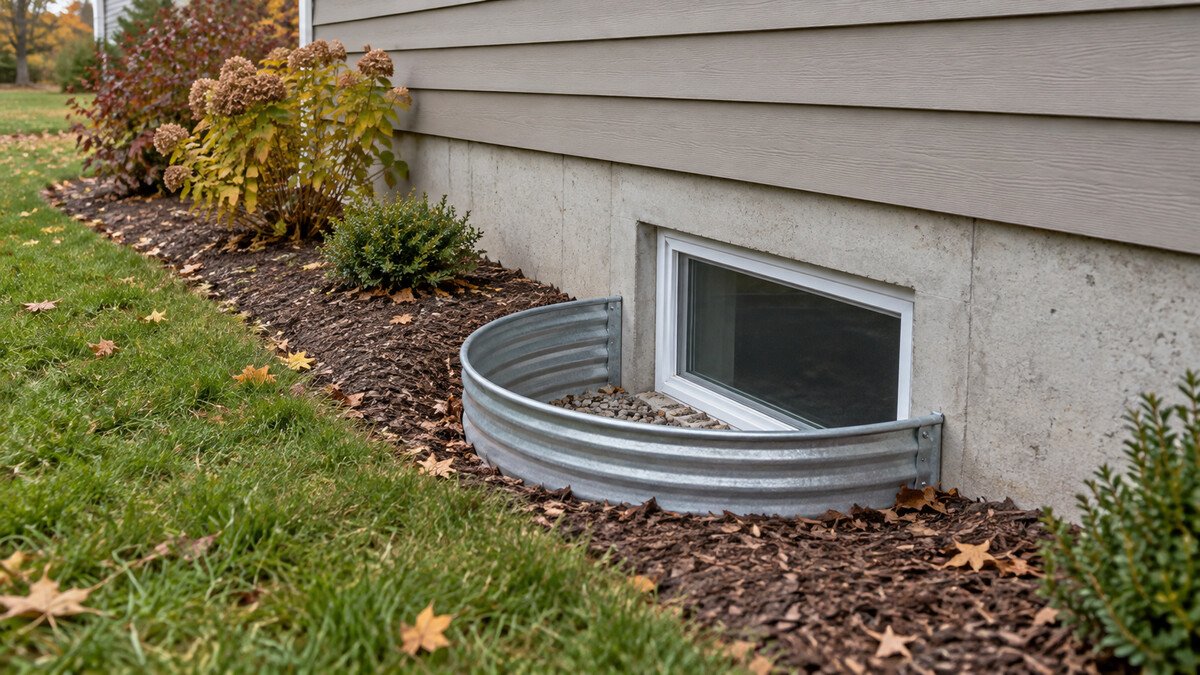
Window well flooding is a reason to understand both water accumulation outside and the entry route into the basement. Keep those findings separate in your notes and ask how each appears in the proposed work. A clear assessment and written scope help you choose the appropriate next step without assuming that a cover, new seal or crack repair answers every question.
Frequently asked questions
Does every window well have a drain pipe?
Do not assume so. Ask what is installed at your property and whether its destination and condition have been established. Gravel visible at the surface is not confirmation of an underground pipe connection.
Can a window well flood even if it has a cover?
A cover does not establish how the well drains or where all incoming water originates. If water still collects, ask for those conditions to be investigated rather than treating the presence of a cover as proof that the well is working.
Does water below a basement window mean the frame leaks?
It is a useful location to report, but the entry point still needs checking. State whether you actually saw water crossing the frame or simply found moisture beneath it.
Will repairing a foundation crack fix the window well?
Only the identified repair scope is addressed by a crack repair. Ask separately how a water-holding well, window defect or drainage concern will be handled; those should not be assumed to be included.
What should I send when asking for a quote?
Send your postal code, a short description, dates, previous repair details and safe photographs of the well and corresponding indoor area. Mention anything you could not see so the visit can address the remaining questions.
Sources: Government of Canada, Basement window maintenance; City of Toronto, How to Prevent Basement Flooding; University of Minnesota Extension, Moisture in basements: causes and solutions. Source links appear beside the relevant guidance above. Reviewed October 6, 2026.